





The power supply may occupy only a small part of a medical or communication device, but its conversion process directly affects how the rest of the equipment receives electrical power. When an OEM chooses an open-frame design, the question is not simply what voltage comes out of the module. Engineers also need to understand how AC power is converted, regulated, isolated, and managed thermally inside the equipment. At UE Electronic, we develop open-frame power solutions with these system-level requirements in mind.
What Is an Open Frame Switching Power Supply?
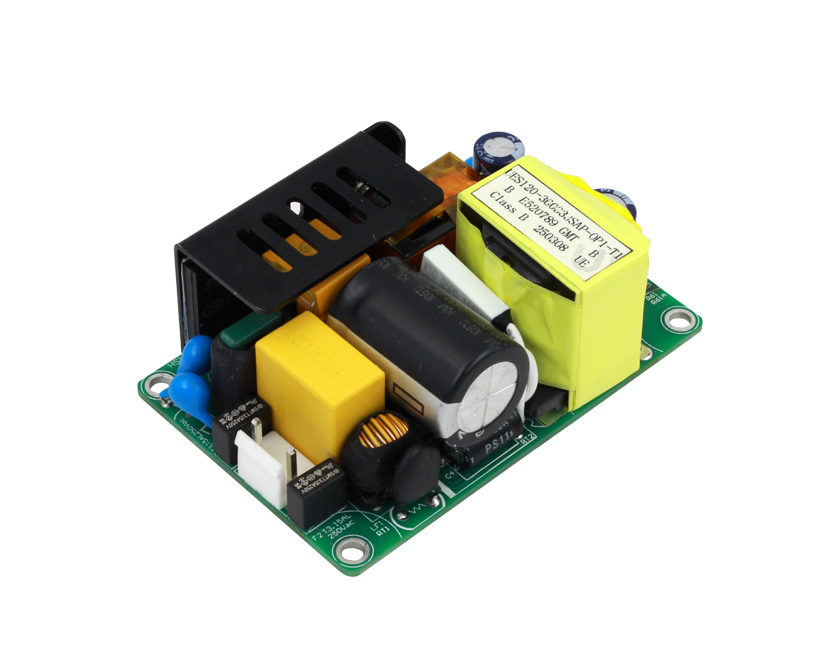
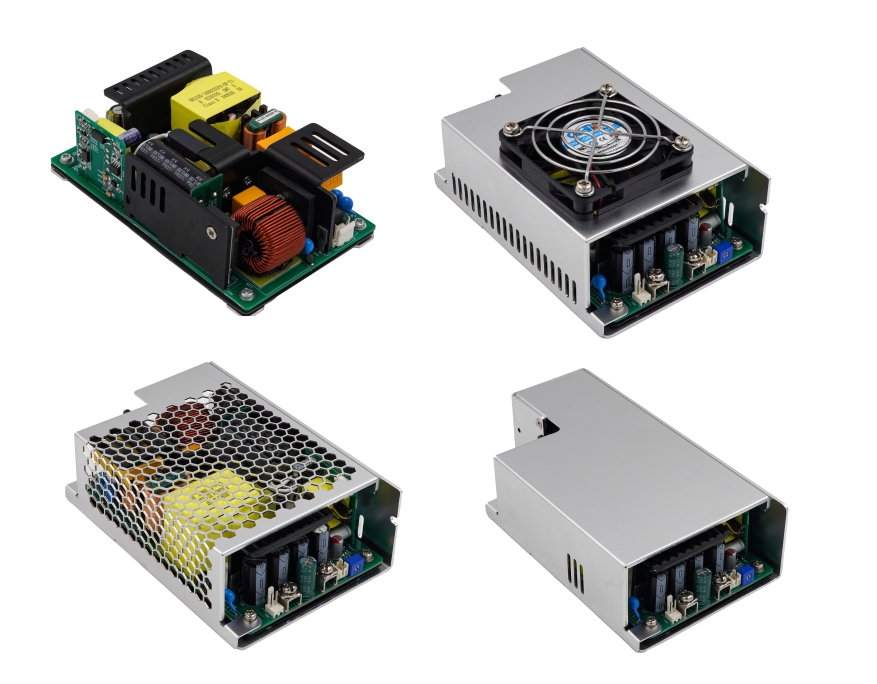
An open frame switching power supply is an AC-DC power conversion module designed without a complete external enclosure. Instead of operating as a self-contained adapter with its own housing, the power module is integrated into the enclosure of the equipment it powers.
This construction gives OEMs greater freedom when planning the internal mechanical layout. The host equipment can provide the physical protection around the power module while also determining mounting arrangements, airflow paths, and separation from other components.
The “switching” part describes how electrical energy is converted. Rather than relying on a large low-frequency transformer to perform the primary voltage conversion, a switching power supply uses electronic switching at high frequency. This allows the conversion system to manage electrical energy through a more compact architecture.
How Does the Switching Process Work?
The conversion process begins when AC electricity enters the power supply through the input stage. The incoming power is conditioned and rectified so that the conversion circuitry can process it.
Also, the switching stage rapidly controls the electrical energy using semiconductor switching components. The high-frequency switching action allows energy to be transferred through the power-conversion circuit and, where applicable, through an isolation transformer.
On the secondary side, the transferred energy is converted into the required DC output. Filtering components smooth the resulting waveform, while a feedback control system continuously monitors output conditions and adjusts the switching process.
What Happens to Heat in an Open-Frame Design?
Power conversion is never completely lossless. Some electrical energy becomes heat, which means thermal management has to be considered alongside the electrical design.
This is particularly relevant to an open-frame product because the power supply does not have its own complete external enclosure and cooling system. The equipment designer therefore needs to consider the position of the module, surrounding components, available airflow, and the thermal characteristics of the final enclosure.
Our UES500-SPAZ-OP provides a useful example. Its mechanical dimensions are 127.0 × 76.2 × 41.0 mm and its listed weight is 480g. The product supports a 320W convection-cooled configuration, while forced-air cooling provided by the user can support the higher specified power configuration.
For this reason, selecting an open-frame module also means planning how the finished equipment will dissipate heat.
How Does the UES500 Convert Different Input Conditions?
The UES500-SPAZ-OP accepts an input voltage range of 80–264VAC, with an input derating reference for 80–115VAC operation. This broad range allows the power module to work with different AC supply conditions within its specified operating limits.
On the output side, the series provides several voltage configurations, including 12V, 15V, 18V, 19V, 24V, 36V, 48V, and 54V.
The electrical characteristics vary according to the selected model. For example, the 12V configuration is specified at 26.66A and 319.92W under convection cooling, while the 24V version provides 13.33A and 319.92W. The 48V configuration is specified at 6.66A and 319.68W. Maximum ripple is listed as 150mVpk-pk for the 12V–18V configurations, 200mVpk-pk for 19V and 24V, and 300mVpk-pk for the higher-voltage configurations.
These differences illustrate why the output voltage should always be evaluated together with current, ripple, cooling, and the actual load requirements.
Why Are Isolation and Protection Important?
The power-conversion process also needs to account for electrical isolation and safety. The UES500-SPAZ-OP provides 2 MOPP isolation protection and a specified leakage current of no more than 100μA. The product is listed for medical and I.T.E. equipment power-adapter applications and carries safety certifications associated with IEC 60601-1 and IEC 62368-1 requirements.
For medical and communication equipment, these characteristics are part of the system-design considerations rather than optional features to evaluate after the power supply has been selected.
At UE Electronic, we consider electrical conversion, isolation, safety requirements, and thermal behavior as connected parts of the power-supply design.
Where Can an Open-Frame Switching PSU Be Used?
The UES500-SPAZ-OP is specified for medical and I.T.E. equipment power-adapter applications. This includes equipment where the power module is installed inside the host system instead of being used as an external desktop or wall-mounted adapter.
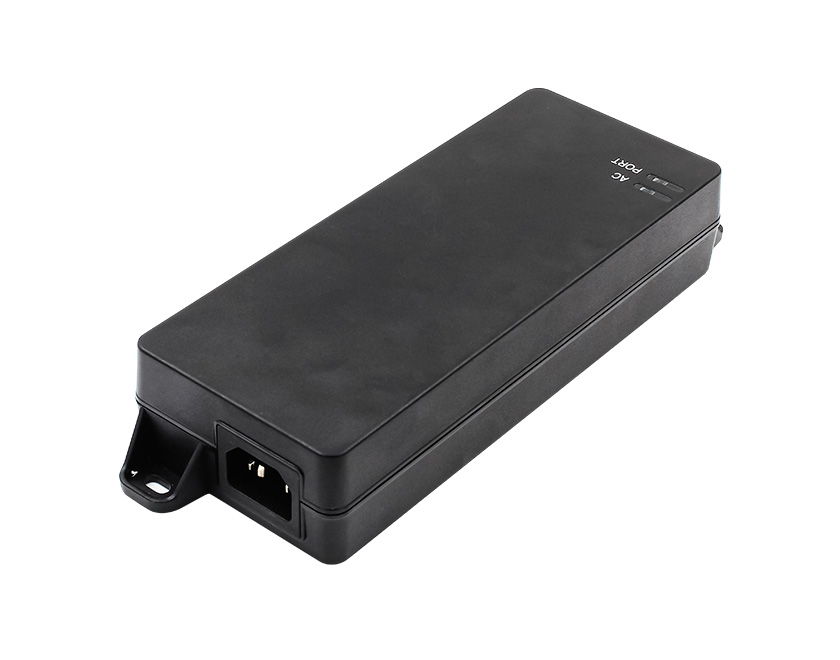
The broader UE Electronic portfolio also covers medical power supplies, I.T.E. power supplies, PoE power supplies, chargers, and other power solutions. Our I.T.E. product range covers power requirements from 5W to 500W, while our product development and verification capabilities include dedicated EMC and DQA laboratories.
The appropriate application still depends on the specific product specifications and the requirements of the finished equipment.
Understanding the Power Supply as Part of the System
An open frame switching power supply is more than a board that changes AC electricity into DC electricity. Its switching circuit, rectification, regulation, filtering, isolation, and thermal behavior all work together to provide the required output.
The open-frame format then places another responsibility on the equipment designer: integrating that power module correctly into the mechanical and thermal architecture of the final product.
At UE Electronic, we view this integration as an important part of power-supply selection. The UES500-SPAZ-OP combines an 80–264VAC input range, multiple DC output options, 2 MOPP isolation, compact 127 × 76.2 × 41.0mm dimensions, and defined cooling configurations. For engineers comparing open frame switching power supply solutions, understanding both the conversion process and the surrounding system requirements provides a more practical basis for selecting the right power architecture.