

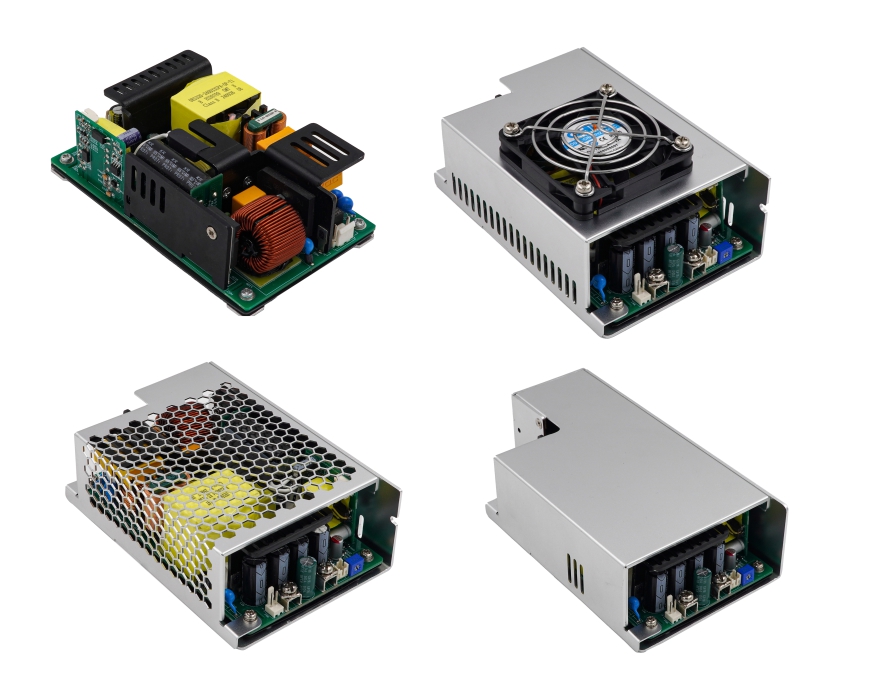




Unlike industrial or commercial applications, medical equipment is directly related to human safety and may involve life-support scenarios. Any malfunction in the power supply system can impact device operation and pose direct risks to patients.
As a critical component, the medical power supply must comply with IEC 60601-1, the globally recognized safety standard for medical electrical equipment. In both the 3rd edition and the 4th edition of this standard, the concept of MOP (Means of Protection) is the core metric for evaluating device safety.
This article will analyze the technical differences between 1 MOPP and 2 MOPP and provide professional selection guidance.

Key Differences: 1 MOPP vs 2 MOPP
1. Isolation structure
2 MOPP requires two independently compliant isolation barriers. Each barrier must individually satisfy the 1 MOPP requirements for dielectric strength, creepage, and clearance.
This is distinct from double insulation in the Class II equipment sense: the two barriers in a 2 MOPP design are evaluated separately, and short-circuiting either one in a single-fault simulation must leave the second fully intact and functional.
2. Creepage Distance
Creepage is the shortest path across an insulating surface between two conductive elements. Typical requirements (e.g., under Material Group II and Pollution Degree 2, according to IEC 60601-1) are:
- 2 MOPP: Requires8 mm
- 1 MOPP: Requires4 mm
These values are not fixed and must be determined based on several factors, including:
- Working voltage
- Insulation material group (CTI)
- Pollution degree
- Overvoltage category
In practical design, creepage distance directly impacts PCB layout and mechanical structure. Trace routing near isolation boundaries, transformer bobbin design, and component placement must all be carefully planned to meet the required distances while maintaining compact form factors.
3. Electrical Clearance
Clearance is the minimum distance through air between two conductive parts.
- 2 MOPP: Requires 5 mm.
- 1 MOPP: Requires 2.5 mm.
As altitude rises, the dielectric strength of air decreases. In accordance with IEC 60601-1 Table 8, when operating at 5,000 m above sea level, clearance specifications must be adjusted upward by a factor of roughly 1.48.
Consequently, the effective 2 MOPP clearance requirement becomes roughly 7.4 mm.
Products intended for high-altitude use (e.g., plateau medical services or airborne equipment) must incorporate this correction at the architectural stage to avoid mechanical redesigns.
4. Dielectric Strength (Withstand Voltage)
The insulation system must pass high-voltage testing without breakdown to ensure patient and operator safety.
- 2 MOPP: Requires withstanding 4,000 VAC (approximately 5,656 VDC).
- 1 MOPP: Requires withstanding 1,500 VAC (approximately 2,121 VDC).
This test is applied across the isolation barrier (e.g., between primary and secondary circuits) to verify the reliability of the insulation system under steady-state working voltages and transient overvoltages.
The 4,000 VAC requirement for 2 MOPP represents reinforced insulation, providing a much higher safety margin than the 1,500 VAC required for basic insulation (1 MOPP).
5. Leakage Current
A common misconception is that 2 MOPP automatically reduces leakage current. In fact, leakage current limits are set by the applied part classification (B, BF, or CF) and remain constant regardless of MOPP level.
However, 2 MOPP designs introduce larger transformer windings with greater interwinding parasitic capacitance, which can increase conducted leakage current.
Y-capacitors used for EMC filtering compound this effect. Designers must carefully manage Y-capacitor values to stay within the leakage budget, often requiring a trade-off against EMC performance.
6. Single–Fault Protection
IEC 60601-1 requires that medical electrical equipment remain safe under any Single Fault Condition (SFC). This applies to both 1 MOPP and 2 MOPP designs. The fundamental difference lies in implementation:
In a 1 MOPP setup, if the isolation layer fails during a fault, the device must rely on other means (such as protective earthing or current limiting) to maintain safety.
A 2 MOPP setup provides intrinsic redundancy; even if one independent barrier fails, the second barrier remains intact. This inherent redundancy is one of the key reasons why 2 MOPP is required for Type CF applications.
Application Selection Guide Based on Device Type
According to the nature of patient contact, the IEC 60601-1 standard classifies medical electrical equipment into three categories of Applied Parts.
1. Type B (Body)
- Definition: Applied parts that are generally not conductive and may be connected to Earth. They are the least protected category.
- Typical Equipment: LED Surgical Lights, Laser Beauty Devices, Medical Laboratory Equipment.
- Power Supply Selection:Generally, 1 MOPP is the minimum requirement. In practice, some manufacturers choose 2 MOPP to simplify global certification or to allow design reuse across multiple product categories.
2. Type BF (Body Floating)
- Definition: Applied parts that have frequent or long-term conductive contact with the patient’s body, but are “floating” (electrically isolated) from Earth.
- Typical Equipment: Ventilators, Blood Pressure Monitors, Ultrasound Diagnostic Systems, Hospital Bed Controllers.
- Power Supply Selection:2 MOPP is mandatory. This is currently the most commonly adopted power supply specification in the medical device market, as it effectively prevents current from flowing through the patient in the event of a secondary circuit failure.
3. Type CF (Cardiac Floating)
- Definition: The most stringent category, referring to parts that come into direct contact with the patient’s heart or enter the bloodstream.
- Typical Equipment:Dialysis Machines, ECG Monitors (Electrocardiographs), Defibrillators.
- Power Supply Selection: 2 MOPP is strictly required. For Type CF, in addition to 2 MOPP from Primary to Secondary, an additional isolation (often 1 MOPP) is typically required between the Output and Earth to further minimize leakage current.
UE Electronic: Your Trusted Partner
Selecting a qualified medical power supply manufacturer is essential for reducing development risks and ensuring compliance with IEC 60601-1.
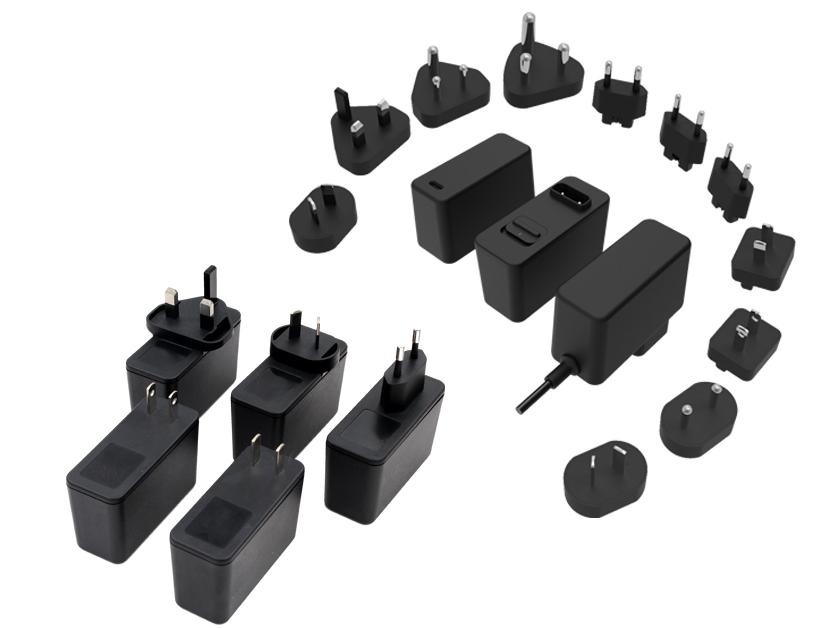
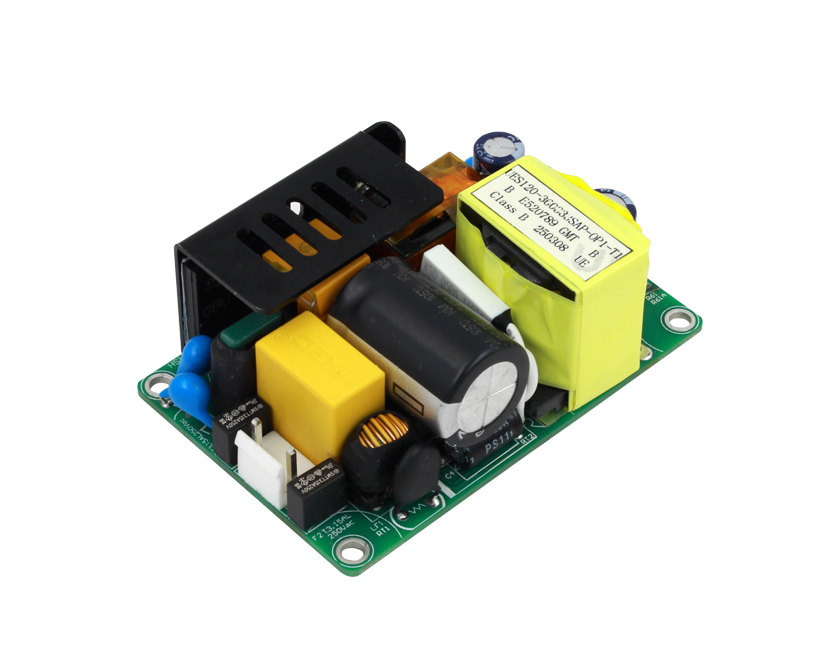
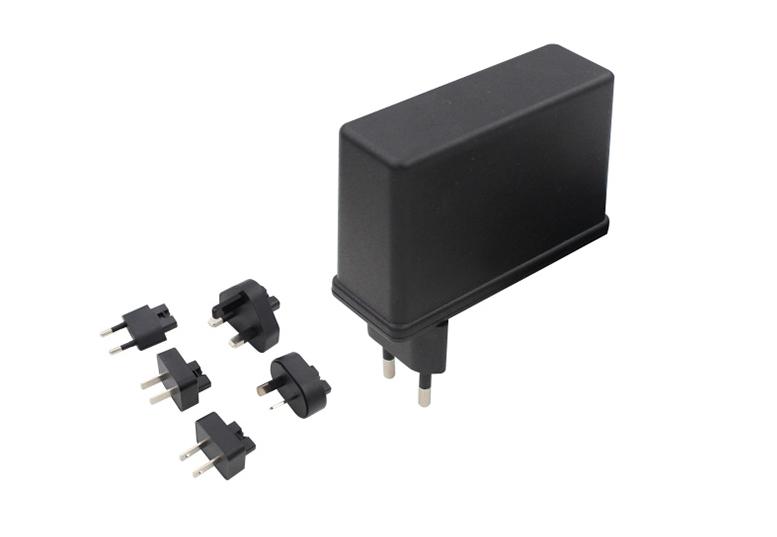
At UE Electronic, we are focused on translating complex safety requirements into reliable and compliant power solutions. Our UES60LCP2-SPA is a high-performance 60W medical adapter specifically engineered for medical scenarios demanding extreme reliability.
Key features include:
- Compliance with 2 MOPP requirements, including 4,000 VAC dielectric strength and appropriate creepage and clearance design
- Low leakage current design suitable for BF and certain CF applications
- Design margins that support operation in high-altitude environments
Conclusion
The difference between 1 MOPP and 2 MOPP fundamentally comes down to isolation levels and safety redundancy. Meeting these medical power supply requirements is not necessarily about choosing “the higher, the better,” but rather selecting the precise match for your specific application.
As medical technology advances toward sensitive cardiac and life-support applications, partnering with an experienced power supply expert is more critical than ever. UE Electronic is dedicated to providing high-performance, IEC 60601-1 compliant medical-grade power supplies, such as the UES60LCP2-SPA, to help you meet safety and compliance requirements while accelerating your time-to-market.