





In compact medical gear, the power supply cannot be designed in a vacuum. Its mounting position, thermal path, electrical isolation, leakage current, and safety certifications can all influence the equipment architecture. This is where a Bare Board Power Supply can become an important part of the integration strategy. At UE Electronic, we design open-frame power solutions around these system-level requirements rather than treating the power supply as an isolated component.

What Does Bare Board Power Supply Mean?
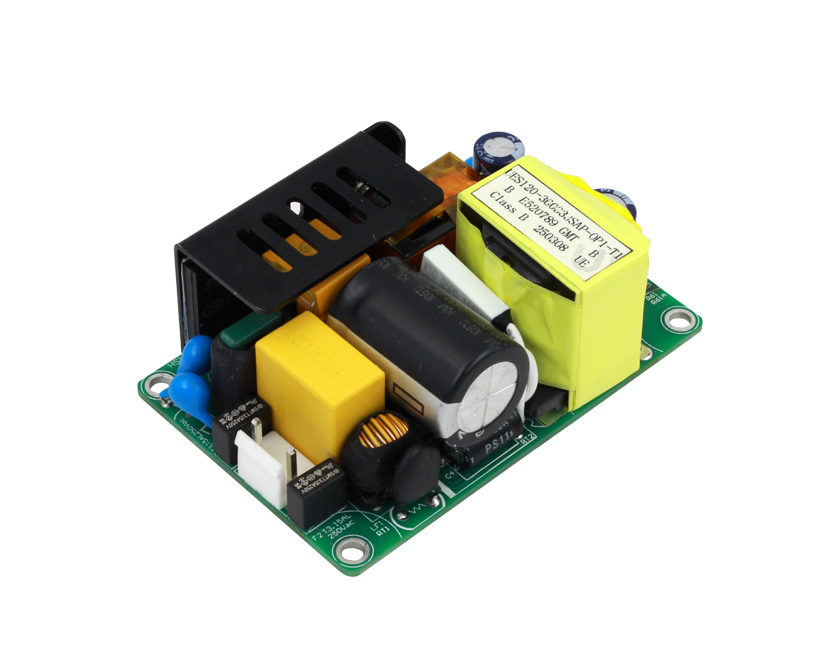
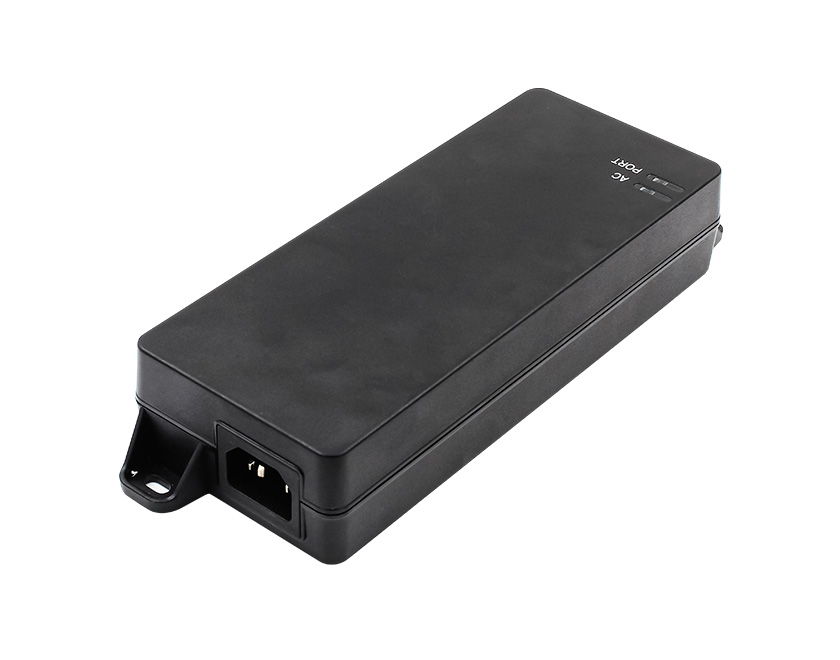
A Bare Board Power Supply is a power-conversion module without a complete external enclosure. Instead of functioning as a self-contained adapter with its own protective housing, the module is designed to be incorporated into the host equipment.
This structure gives OEMs greater control over mechanical integration. The equipment enclosure can determine the mounting arrangement, spacing, airflow path, and physical protection around the power module. For medical equipment, where internal components often need to be carefully arranged, this flexibility can be useful during system development.
The open-board structure also means that the power supply’s characteristics cannot be considered independently from the host equipment. The final design needs to provide appropriate protection, thermal conditions, and mechanical installation while meeting the relevant electrical and safety requirements.
Why Does Open-Frame Integration Matter in Medical Equipment?
Medical equipment can place specific demands on its internal power architecture. The power supply may need to operate within a defined enclosure while maintaining appropriate isolation and leakage-current characteristics.
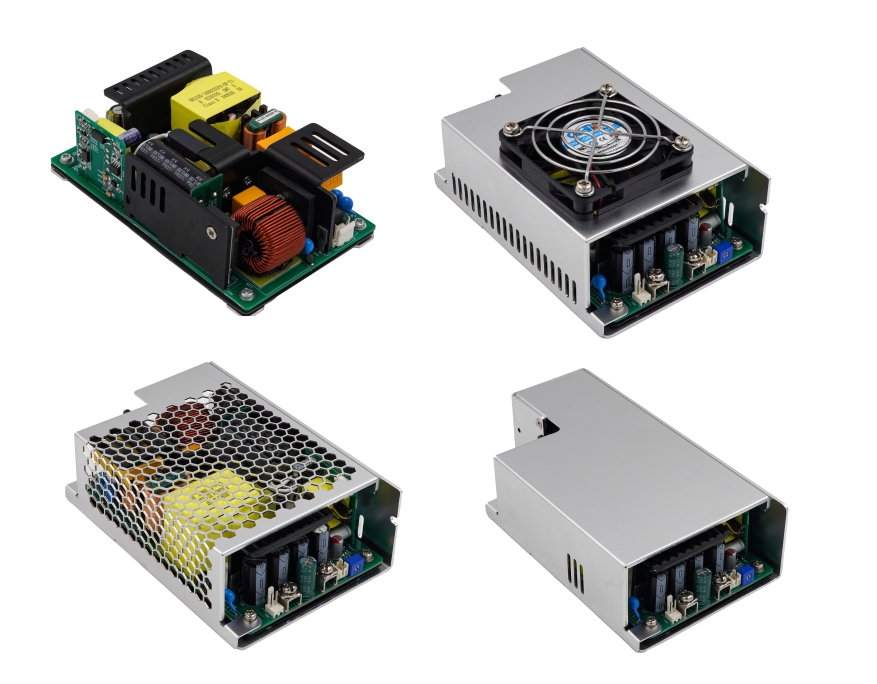
Our UES500-SPAZ-OP is designed for medical and I.T.E. equipment power-adapter applications. The product provides 2 MOPP isolation protection and specifies leakage current of no more than 100μA. The official product information lists safety certifications associated with IEC 60601-1, EN 60601-1, and applicable IEC 62368-1 requirements.
For system designers, these characteristics are important because the power supply forms part of the equipment’s overall electrical safety architecture. Selecting an open-frame module therefore requires more than checking whether its output voltage matches the electronic load.
How Does the UES500 Fit Into a Medical System?
The physical dimensions of the power module can directly affect how much freedom an OEM has when arranging internal components. The UES500-SPAZ-OP measures 127.0 × 76.2 × 41.0mm and weighs 480g. Its specified operating temperature is -30°C to 70°C, with the 30–70°C range subject to the product’s derating curve.
The module accepts 80–264VAC input, with an 80–115VAC reference derating curve. Its available output configurations range from 12V to 54V.
This range allows different equipment architectures to be evaluated against different DC voltage requirements. For example, the 12V version is specified at 26.66A and 319.92W under convection cooling, while the 24V version provides 13.33A and 319.92W. The 48V version is specified at 6.66A and 319.68W. The maximum ripple specifications vary by output model, from 150mVpk-pk on the lower-voltage configurations to 300mVpk-pk on the higher-voltage versions.
These details show why an OEM should select the exact output configuration according to the system’s electrical requirements rather than treating the product family as one identical power specification.
Thermal Management Is Part of Integration
An open-frame structure gives the equipment designer more responsibility for thermal integration. The power module needs to be positioned so that the host system can provide suitable heat dissipation conditions.
The UES500-SPAZ-OP is specified for 320W operation with convection cooling. The product information also states that 500W operation can be achieved with forced air cooling provided by the user.
For medical equipment designers, this means the cooling method needs to be considered during mechanical development. Mounting direction, airflow, surrounding components, enclosure ventilation, and expected operating load can all influence the thermal environment around the power module.
The advantage of an open-frame approach is that these factors can be incorporated into the host equipment’s design rather than being determined entirely by a separate external power-supply enclosure.
Why Are Electrical Specifications Only One Part of the Decision?
A power module may have the correct nominal output and still be unsuitable if its other characteristics do not correspond to the equipment requirements. For an integrated medical system, designers may need to consider input range, output tolerance, ripple, isolation, leakage current, standby consumption, operating temperature, humidity, altitude, and applicable safety standards together.
The UES500-SPAZ-OP specifies output voltage tolerance of ±5%, standby power consumption of no more than 0.5W, and operation at altitudes up to 5,000 meters. Its specified operating humidity is 5–90% RH, non-condensing. The product page also lists an MTBF greater than 100,000 hours under MIL-HDBK-217 at 25°C ambient temperature.
These specifications provide useful reference points for system engineers, but the final suitability still depends on the complete equipment design and its applicable requirements.
How We Approach Power Integration at UE Electronic
At UE Electronic, we recognize that medical power integration involves more than delivering DC voltage to a circuit board. Our broader power portfolio includes medical, I.T.E., communication, PoE, and other application-oriented solutions, while our development resources include dedicated EMC and DQA capabilities.
For an OEM, this type of development support can be relevant when the power supply must be considered alongside the equipment’s electrical and mechanical architecture. An open-frame module allows the customer to build the surrounding system around the power-conversion stage, while the power supply itself needs to provide the specified electrical and safety characteristics.
Building the Power Supply Into the System
The value of a Bare Board Power Supply in medical system integration comes from the relationship between the module and the equipment around it. The open structure provides mechanical and thermal integration flexibility, while the power supply still needs to meet its specified electrical, isolation, and safety requirements.
Our UES500-SPAZ-OP brings together an 80–264VAC input range, multiple output configurations from 12V to 54V, 2 MOPP isolation, ≤100μA leakage current, and a compact 127.0 × 76.2 × 41.0mm form factor. For engineers evaluating an open frame switching power supply for medical equipment, these characteristics offer a foundation for designing the power stage as an integrated part of the finished system.
At UE Electronic, we believe the most effective approach is to evaluate the power module and the host equipment together. When electrical specifications, thermal conditions, mechanical installation, and safety requirements are considered from the beginning, the power supply can become a purposeful part of the equipment architecture rather than an afterthought.