





Fast charging protocols are communication rules between a charger and a connected device. Through this negotiation, the charger can deliver higher power safely while helping reduce heat buildup, minimize conversion loss, and improve charging efficiency.
For consumer electronics and professional portable devices, protocol support is especially important because one charger may need to work with different brands, battery designs, and power requirements.
Understanding protocol support helps B2B buyers select a more suitable PD fast charger for different product lines, application scenarios, and device ecosystems.
What is PD 3.0?
1. What is USB Power Delivery(USB PD)?
Before explaining PD 3.0, it is important to understand USB PD. It is the foundational fast charging standard engineered for USB-C connections.
Its primary objective is to enable dynamic communication between the charger and the connected device, establishing a secure power contract for the optimal voltage and current levels. Compared with older fixed-output charging methods, USB PD supports broader cross-platform compatibility across different device brands, battery designs, and power requirements.
2. What is PD 3.0?
PD 3.0 is a widely used version of the USB PD standard.
The main mechanism is digital communication through the USB-C connection. When a charger is connected to a device, they exchange information and agree on a suitable voltage and current level. Instead of simply delivering a fixed output, the charger provides power based on what the connected device can safely accept.
Under the Standard Power Range, a PD 3.0 charger can deliver up to 100W, depending on the charger design, cable capability, and connected device. This makes PD 3.0 suitable for many USB-C devices, including smartphones, tablets, laptops, POS terminals, portable monitors, and high-performance handheld terminals.
For brands that need to support multiple product lines, a PD 3.0 charger can be a practical choice because it improves compatibility and reduces the need for multiple charger models.
What is PPS?
PPS, short for Programmable Power Supply, is a precision power adjustment feature within the USB Power Delivery framework. It is not a separate charging protocol competing with PD 3.0.
Standard PD charging typically uses fixed voltage profiles, such as 5V, 9V, 15V, and 20V. These profiles are suitable for many USB-C devices, including laptops, tablets, and other higher-power electronics.
However, for compact devices such as smartphones and handheld terminals, fixed-voltage steps may introduce additional conversion loss when the device adjusts its input power to match battery requirements.
With PPS, the connected device can request smaller adjustments in voltage and current based on real-time charging needs. This helps reduce unnecessary conversion loss and heat buildup.
What is QC 3.0?
Qualcomm Quick Charge 3.0, abbreviated as QC 3.0, was designed to help compatible devices charge faster by allowing the device and charger to negotiate a more suitable voltage level during charging.
The key feature of QC 3.0 is Intelligent Negotiation for Optimum Voltage. Instead of using only a few fixed voltage levels, QC 3.0 can adjust the voltage in 200 mV increments within a range of 3.6V to 20V. This helps the charger deliver power more efficiently and reduce unnecessary energy loss.
However, newer USB-C charging designs increasingly prioritize USB Power Delivery and PPS for broader cross-platform compatibility and better alignment with modern USB-C charging requirements.
For B2B buyers, QC 3.0 support can still add compatibility value, especially for older devices and USB-A charging scenarios. At the same time, PD 3.0 and PPS are more relevant to many new USB-C charger designs.
PD 3.0 vs PPS vs QC 3.0
Technical Feature | PD 3.0 | PPS | QC 3.0 |
Protocol Type | Open USB Power Delivery standard version | Programmable power adjustment feature within USB PD | Proprietary fast charging technology by Qualcomm |
Voltage Control | Fixed voltage profiles, such as 5V, 9V, 15V, and 20V | Dynamic voltage adjustment | Dynamic voltage adjustment |
Current Control | Defined by negotiated power profiles | More flexible current adjustment based on device requests | Managed by compatible device and charger negotiation |
Max Power Output | Up to 100W under Standard Power Range | Up to 100W under USB PD, depending on charger, cable, and device support | Commonly used around 18W for mobile devices |
Main Mechanism | Digital communication over the USB-C CC line | Real-time power adjustment through USB PD communication | INOV-based voltage negotiation, often used in older USB-A charging scenarios |
Primary B2B Benefit | Broad USB-C compatibility across multiple product lines | Helps reduce conversion loss and heat buildup in compact devices | Adds compatibility value for older Android devices and USB-A charging accessories |
Fast Charging Solutions from UE Electronics
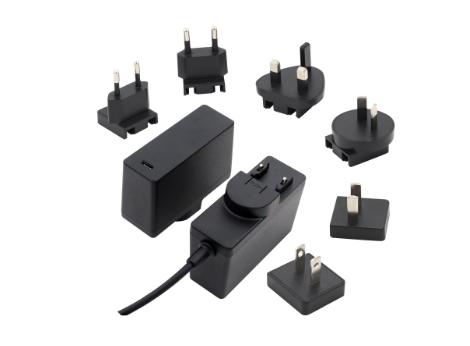
At UE Electronics, we offer fast charging adapter solutions for different portable device applications, helping customers match charging performance, protocol compatibility, and safety requirements across multiple product lines.
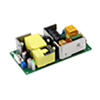
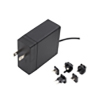
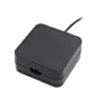
For higher-power multi-device charging, the UES100LZ1-SPC supports simultaneous fast charging for three devices. It is designed with two Type-C output ports and one USB-A output port. Its Type-C ports support PD 3.0, PPS, QC 3.0, QC 2.0, and other fast charging protocols, while the USB-A port supports QC 3.0, QC 2.0, and other protocols.
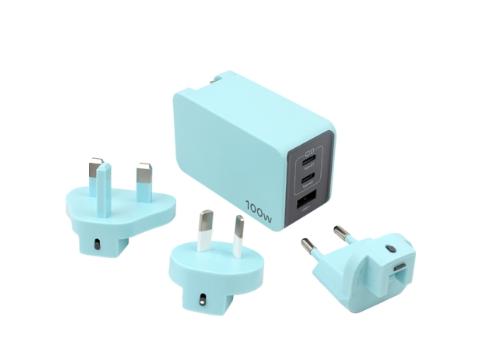
The UES45LCP/UES45LCP1-SPC complies with safety certification standards for telecommunications and medical equipment. It features high energy efficiency and ultra-low standby power consumption, meeting Level X efficiency standards. It also supports PD 3.0, QC 3.0, QC 2.0, and PPS fast charging protocols.
Conclusion
Fast charging protocols have become a key part of charger selection. By pairing your product lines with certified power adapters that support the right fast charging protocols, you can improve charging compatibility, support more stable performance, and create a better user experience across different device applications.
Contact UE Electronics today to receive customized specifications and volume pricing for your hardware roadmap.