

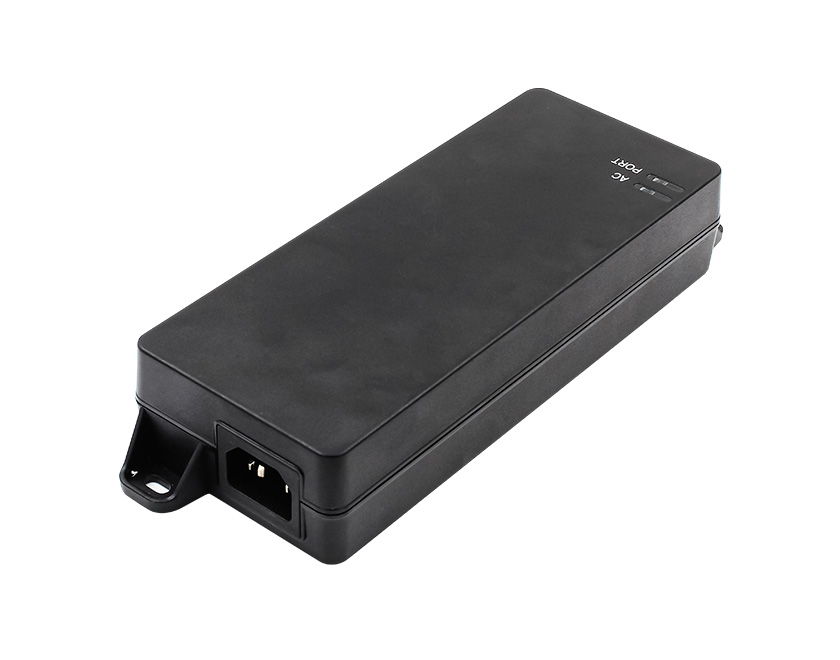


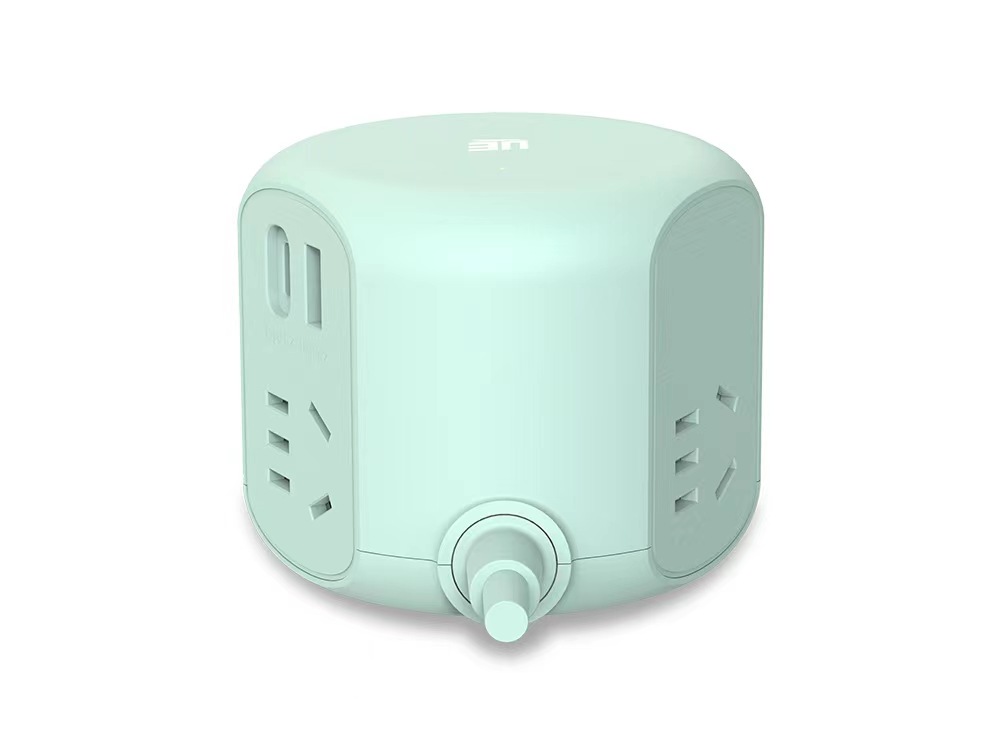


When an OEM needs to integrate AC power conversion into medical or communication equipment, the power supply is not simply another component to place inside the enclosure. Its dimensions, cooling method, output requirements, safety characteristics, and installation environment all influence the design of the finished system. At UE Electronic, we use the open-frame format for applications where the power-conversion module needs to become part of the host equipment’s architecture rather than operate as a separate enclosed unit.
What Does Open Frame Power Supply Mean?
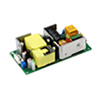
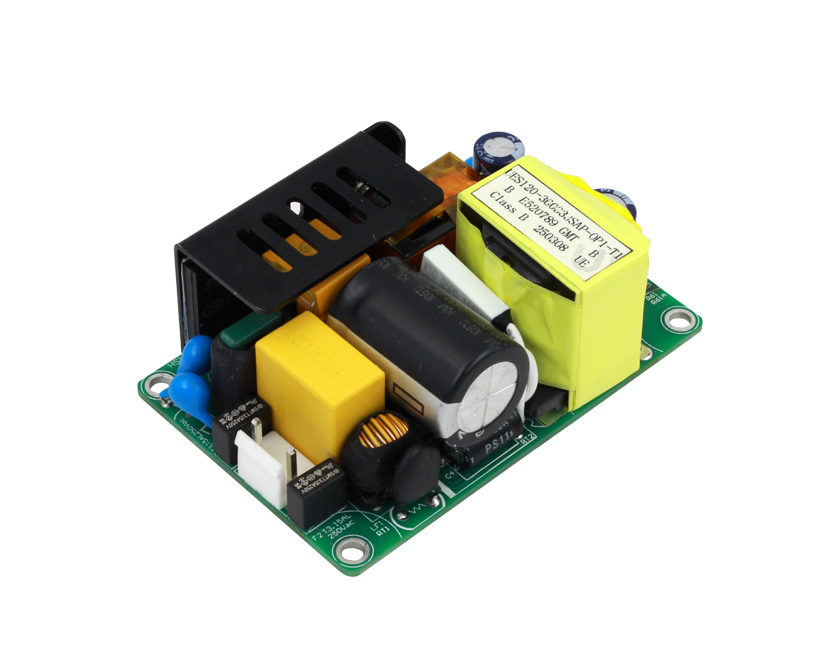
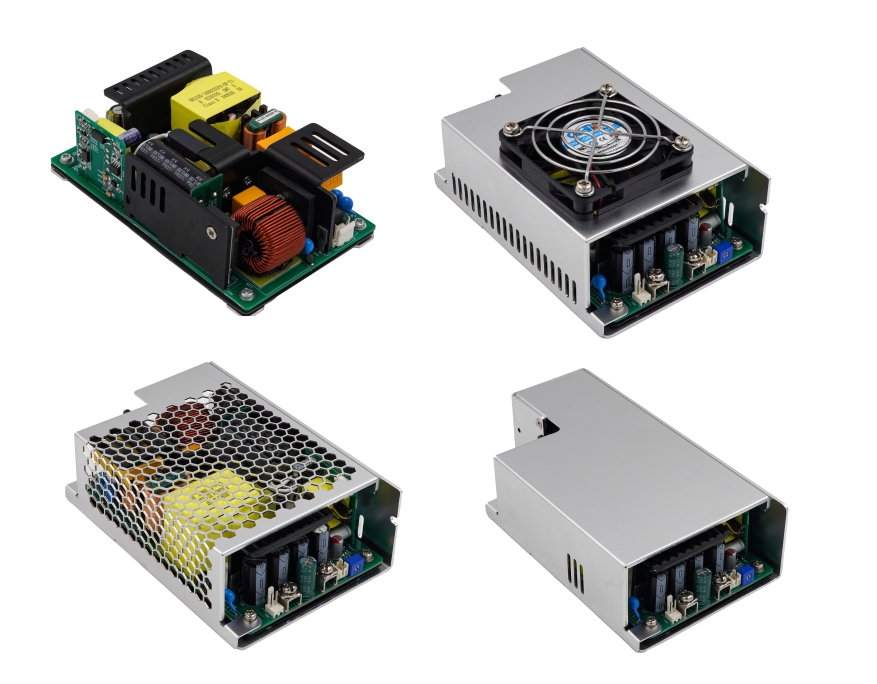
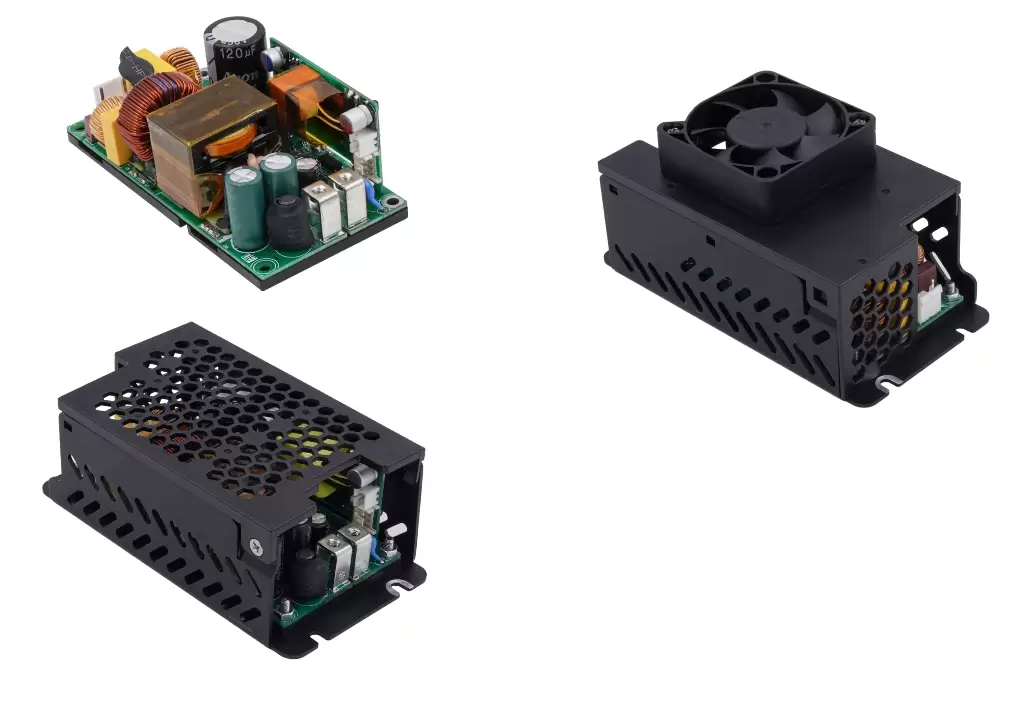
An open frame power supply is a power-conversion module designed without a complete external enclosure. Instead of surrounding the electronics with its own finished housing, the module is integrated into the enclosure of the equipment it powers.
This structure gives equipment designers more freedom over mechanical layout. The host enclosure can determine how the power supply is mounted, how air moves around it, and how the module is separated from other internal components. For OEM development, that can make the power supply easier to incorporate into equipment with a defined internal architecture.
An open-frame design should not, however, be understood simply as a smaller version of an enclosed power supply. The cooling arrangement, protection requirements, mounting method, and environmental conditions all need to be considered as part of the complete equipment design.
How Does an Open-Frame AC-DC Supply Fit Into Equipment?
The basic function is to convert AC input electricity into regulated DC output suitable for the connected electronics. The exact conversion architecture depends on the product, but the power supply must manage input conditions, switching, regulation, isolation, and output characteristics within its specified operating range.
Our UES250-SPAZ-OP is an example of this approach. It accepts an input voltage of 80–264VAC, with the manufacturer specifying a derating curve for 80–115VAC operation. The series provides output configurations from 12V to 54V, allowing the OEM to select a version according to the voltage requirements of the host equipment.
The product’s mechanical dimensions are 101.6 × 50.8 × 35.3 mm, with a listed weight of 480g. These dimensions allow the power module to be incorporated into a host system while leaving the surrounding enclosure and mounting structure to the equipment designer.
Why Is Cooling Important in an Open-Frame Design?
Because the power supply does not have a complete external enclosure, thermal management becomes closely connected with the host equipment. Airflow, mounting position, surrounding components, and operating temperature can all affect how heat is managed.
The UES250-SPAZ-OP provides two relevant power configurations. The open-frame version supports up to 150W with convection cooling, while the specified 250W configuration uses forced air provided by the user. This distinction is important when designing the complete system because the available cooling method needs to correspond with the selected operating configuration.
The product operates from -30°C to 70°C, with a derating curve specified for 30–70°C operation. Its storage temperature is -40°C to 80°C, while the specified operating humidity is 5–90% RH, non-condensing. The working altitude reaches 5,000 meters.
For an OEM, these figures provide practical boundaries for determining whether the power supply can operate within the intended equipment environment.
What Output Options Does the UES250 Provide?
The UES250-SPAZ-OP is not limited to one DC output. Its available configurations include 12V, 15V, 18V, 19V, 24V, 36V, 48V, and 54V.
For the convection-cooled configuration, the listed rated output is approximately 150W across these voltage options. The 12V version provides 12.50A and 150W, while the 24V version provides 6.25A and 150W. At 48V, the output is 3.12A and 149.76W, and the 54V version provides 2.77A and 149.58W.
The forced-air configuration extends the rated output to approximately 250W. For example, the 12V model is specified at 20.83A and 249.96W, while the 24V model provides 10.41A and 249.84W.
These figures demonstrate why selecting a power supply involves more than matching a nominal voltage. The required current, cooling method, ripple specification, and expected load should all be reviewed against the appropriate model.
Where Do We Use Open-Frame Power Supplies?
At UE Electronic, we position the UES250-SPAZ-OP for power-adapter applications in medical and I.T.E. equipment. This includes equipment architectures where the power module is installed within the host product rather than used as a standalone external adapter.
For medical equipment, the UES250-SPAZ-OP provides 2 MOPP isolation protection and a specified leakage current of no more than 100μA. The product page lists CB, TUV Mark, and NRTL certifications associated with IEC 60601-1 and IEC 62368-1 requirements.
For I.T.E. applications, the same platform can be evaluated for equipment requiring regulated DC power within its specified electrical and environmental conditions. The correct selection still depends on the final equipment’s requirements rather than the power-supply category alone.
How Should Engineers Evaluate an Open-Frame Design?
When we select an open-frame solution, we look at the complete integration conditions. First, the input range and required output voltage must match the equipment. Next, the required output power needs to be considered alongside the available cooling method.
Mechanical dimensions are equally important because the module needs sufficient space for mounting and appropriate separation from surrounding components. Operating temperature, humidity, altitude, leakage current, isolation, and applicable safety standards should also be reviewed during system development.
Efficiency is another useful specification. Depending on the output configuration, the UES250-SPAZ-OP lists average efficiency from 92% to 94%. Standby power consumption is specified at no more than 0.5W. These characteristics can form part of the broader electrical and thermal evaluation.
Designing Around the Power Supply, Not Just Selecting It
An open frame power supply is best understood as an integrated part of the equipment rather than an isolated box that simply provides DC voltage. Its value comes from how effectively its electrical characteristics, cooling requirements, mechanical dimensions, and safety features fit the host system.
At UE Electronic, we develop open-frame solutions with this system-level perspective. The UES250-SPAZ-OP combines multiple output options, an 80–264VAC input range, 2 MOPP isolation protection, and flexible convection- or user-provided forced-air cooling configurations. For OEMs evaluating switching power supplies, understanding these integration factors can provide a more useful basis for product selection than focusing on output voltage or wattage alone.