





Plugging in a laptop, phone, and daily gear quickly buries a hotel desk or nightstand in power bricks. For equipment designers and power-solution buyers, the more useful question is not simply whether a socket has USB ports, but whether the combination of AC outlets, charging interfaces, power distribution, and protection matches the intended environment. At UE Electronic, we approach this type of product as an integrated power solution rather than just another charging accessory.
What Should a USB Charging Outlet Provide?
A useful charging outlet needs to accommodate different types of equipment without forcing users to carry a separate adapter for every device. Headphones are a good example. Wireless headphones and earbuds commonly use USB charging connections, while a laptop or other equipment may still require a conventional AC connection.
This is where an AC power socket with integrated USB outputs can be useful. Instead of treating AC power and USB charging as two separate functions, an integrated unit places them within the same power-distribution system.
For a product intended for shared environments, the number and type of ports also matter. A combination of Type-C and USB-A outputs can support different generations of consumer electronics, while multiple ports allow several devices to be connected at the same time.
Why Type-C and USB-A Matter for Headphones
Not every headphone or earbud charging case uses the same connector or charging protocol. Some devices rely on USB-A cables, while newer products are more likely to use USB-C connections. A charging station that offers both interfaces can therefore provide greater compatibility.
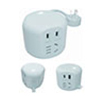
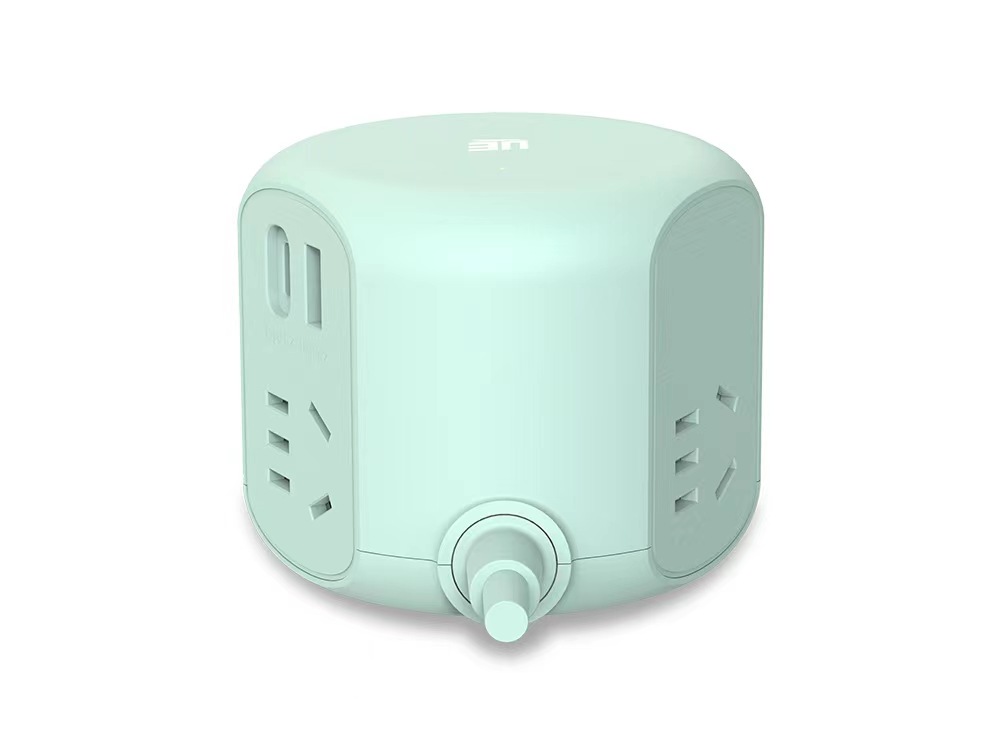
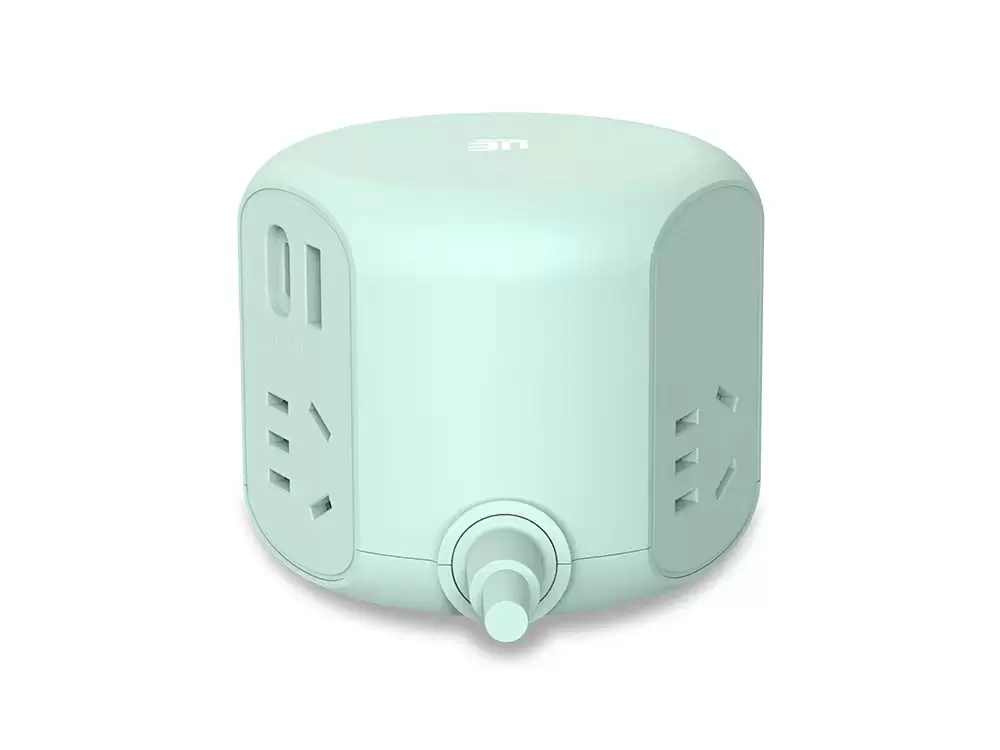
Our UEP35A322XXX combines two standard Type-C output ports with two USB-A output ports, alongside three standard 2+3 combination AC jacks. The Type-C1 port supports PD3.0, PPS, QC3.0, QC2.0, and other fast-charging protocols, while the USB-A ports support DCP, APPLE2.1A, and other protocols.
For headphones, this means the same integrated power point can accommodate different charging arrangements without requiring the user to dedicate the AC socket to a separate USB charger.
How Much Power Does a Headphones Outlet Need?
Headphones generally do not require the same charging power as laptops or other higher-demand electronics. This makes it important to look at the actual output configuration rather than choosing a power socket based only on its headline wattage.
The UEP35A322XXX provides a Type-C1 output of up to 35W when used as a single port, with selectable outputs of 5V/3A, 9V/3A, 12V/2.91A, 15V/2.33A, and 20V/1.75A. The Type-C2 and USB-A ports each provide up to 10W when used individually.For users looking for a convenient headphones outlet, having a USB charging interface that matches the connected device can be more important than simply having a higher total power rating.
When several devices are connected, the available power is distributed according to the specified port combination. For example, Type-C1+C2 can provide 20W+10W for a 30W maximum combined output, while Type-C1+A2 is also specified at 20W+10W and 30W maximum. This intelligent power distribution is particularly relevant to shared charging environments where users may connect more than one device.
What Makes an Integrated Outlet Practical?
A conventional wall outlet provides access to AC power, but it does not necessarily solve the problem of charging USB-powered electronics. Adding integrated USB outputs can reduce the need for separate charging adapters and make the power point more useful in locations where multiple portable devices are used.
We designed the UEP35A322XXX with this type of multi-device environment in mind. Its application list includes mobile phones, laptops, smart watches, headphones, speakers, and other portable devices. The product measures 84.0 × 80.0 × 67.0mm and weighs approximately 360g. Its specified working temperature is 0–25°C, with storage temperature from -40°C to 80°C.
The product also incorporates output short-circuit, overcurrent, overvoltage, and overtemperature protection. A master control switch allows the connected power circuit to be switched on or off with one operation. These features make the product relevant to environments where convenience needs to be considered alongside basic power-management requirements.
Where Can This Type of Charging Solution Be Used?
A combined AC and USB charging point can fit naturally into desks, work areas, hospitality environments, residential spaces, and other locations where portable electronics are regularly charged. For example, a desk may need to provide AC power for a computer while simultaneously charging headphones, a smartphone, and a smartwatch.
The UEP35A322XXX is categorized by UE Electronic as a power-strip product, and its official application information specifically identifies portable electronics including headphones and speakers. Its input voltage range is 180–264VAC, and its safety specifications include CCC requirements covering GB4943.1, GB/T 2099.1, GB/T 1002, and GB 2099.7.
For OEMs or project buyers, these details are more useful than simply asking whether a product has “USB charging.” The actual input range, port configuration, output combinations, protection functions, dimensions, and applicable standards should all correspond to the intended installation.
Choosing a Charging Outlet Around the Whole System
A good USB charging outlet should make the complete power arrangement simpler without overlooking electrical requirements. For headphones, that means providing a suitable USB connection; for the surrounding environment, it may also mean retaining conventional AC access and supporting several devices at once.
At UE Electronic, we combine AC power distribution with USB charging interfaces to address these practical requirements. The UEP35A322XXX brings together three AC jacks, two Type-C ports, two USB-A ports, multiple charging protocols, and intelligent power distribution in one product. For businesses and equipment designers evaluating an AC power socket for modern charging environments, this integrated approach can be more useful than treating every charging need as a separate accessory.