





Why Do Altitude and Temperature Extremes Threaten Medical Power Supplies?
Altitude and temperature extremes threaten medical power supplies because thin air weakens insulation and heat has fewer places to go. Both problems trace back to physics, not manufacturing shortcuts. A power supply built for a sea-level clinic can fail the moment it’s shipped to a mountain hospital or a field ambulance.
What Happens to Electrical Insulation at High Altitude?
Air itself acts as an insulator between live parts inside a power supply. At sea level, air’s dielectric strength is roughly 3kV per millimeter. As altitude rises, air pressure drops, molecules spread further apart, and that insulating barrier weakens.
This is why engineers reference Paschen’s Law when designing for elevation. At 5,000 meters, the required clearance is subject to an altitude correction factor of approximately 1.48 compared with the 2,000-meter reference level.
Why Do Compact Medical Devices Struggle With Heat?
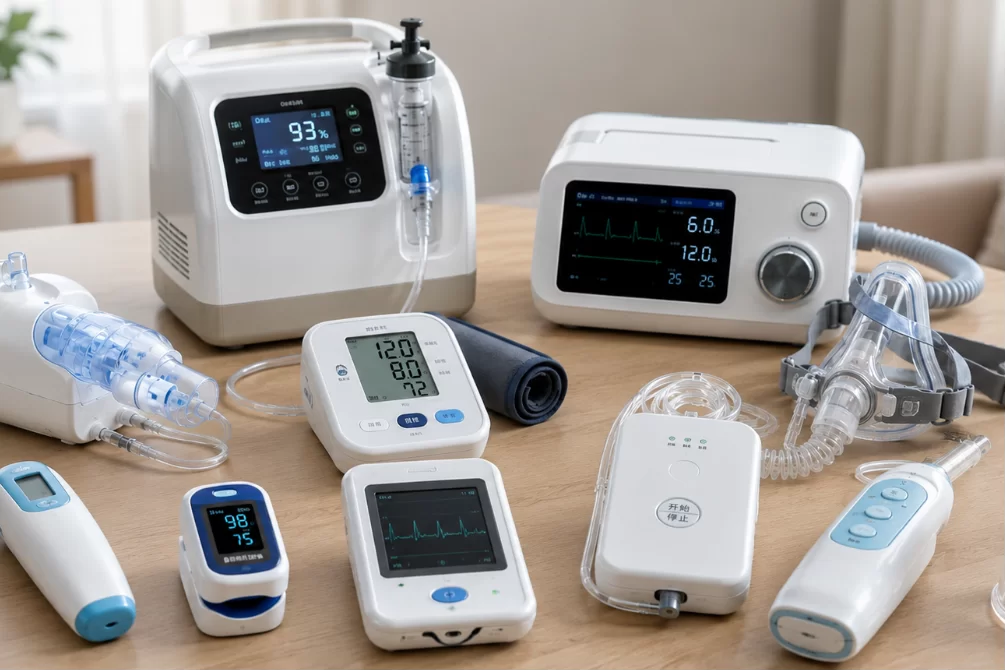
Compact medical devices struggle with heat because thinner air also carries away less warmth through natural convection. A portable oxygen concentrator or ventilator crammed into a small housing already runs hot; reduced cooling efficiency at altitude pushes internal temperatures further.
Therefore, a power supply for medical equipment destined for high-altitude or high-heat deployment needs two engineering responses: reinforced insulation and a thermal strategy that doesn’t rely on brute-force airflow.
How Does High-Altitude Insulation Design Keep Patients Safe?
High-altitude insulation design keeps patients safe by extending creepage distances and clearances beyond standard sea-level specifications. This isn’t a cosmetic adjustment — it’s a structural requirement under IEC 60601-1, the governing safety standard for medical electrical equipment.
What Is 2×MOPP Isolation and Why Does It Matter?
2×MOPP (Means of Patient Protection) isolation matters because it provides two independent layers of protection between mains voltage and any part of the device that could contact a patient. If one layer degrades, the second still blocks current from reaching them. IEC 60601-1 generally expects 2×MOPP designs to sustain isolation voltages around 4,000VAC with roughly 8mm of creepage distance at standard conditions, according to compliance guidance published by Wall Industries.
For a power supply used in defibrillators or ventilators, this redundancy isn’t optional. A single-fault failure in a life-support device is unacceptable, so the isolation margin has to absorb component drift, humidity, and altitude-driven clearance reduction all at once.
How Much Extra Clearance Is Needed at 5,000 Meters?
At 5,000 meters, clearance requirements increase by roughly 1.48 times compared to sea-level baselines, based on the Paschen’s Law relationship described above. Engineers translate that multiplier into physical spacing on the circuit board — wider gaps between traces, taller barriers between primary and secondary sides, and conservative margins around connectors.
Design Element | Sea-Level Baseline | High-Altitude (5,000m) Adjustment |
Isolation class | 2×MOPP | 2×MOPP maintained |
Creepage/clearance | Standard IEC 60601-1 minimum | ~1.48x wider clearance |
Leakage current | Standard limit | ≤100μA maintained under load |
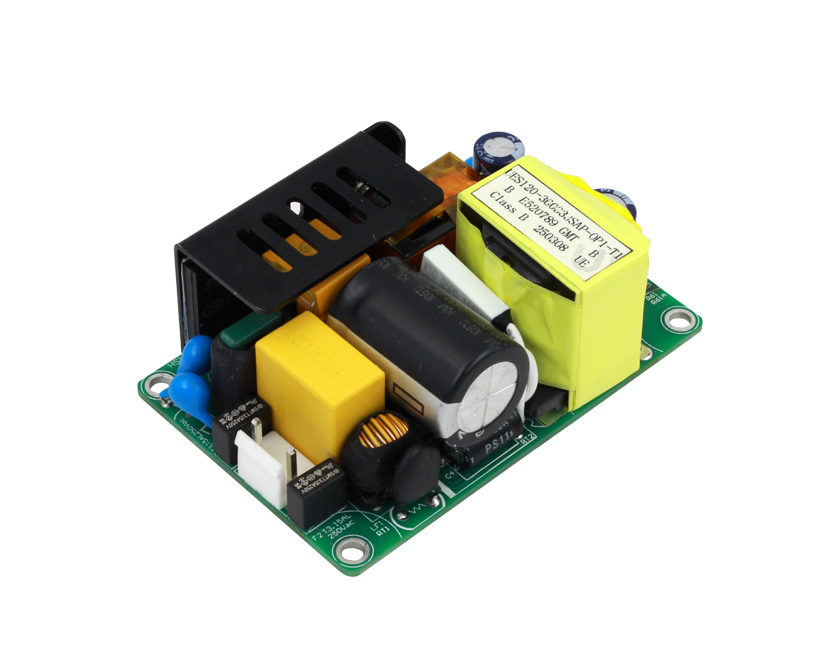
UE Electronic‘s open-frame AC-Dc power supply line is built around this exact logic, rating leakage current at ≤100μA and maintaining 2 MOPP isolation up to a stated 5,000-meter working altitude.
How Do Wide Input Range and Thermal Derating Prevent Overheating?
A wide input voltage range and a defined thermal derating curve prevent overheating by giving the power supply headroom before it ever approaches its limits. Instead of running near maximum capacity under normal conditions, the design keeps a buffer for grid instability and ambient heat.
What Does an 85–264VAC Input Range Protect Against?
An 85–264VAC input range protects against unstable power grids, common in remote clinics, mobile units, and regions with inconsistent utility infrastructure. Because the supply accepts such a broad voltage window, a brownout or spike doesn’t automatically translate into a shutdown.
For example, the UES120-SPAZ-OP accepts 85–264VAC input, with its derating curve referenced against the 85–115VAC band — the range where voltage sag is most likely to occur in the field.
How Does the Thermal Derating Curve Actually Work?
A thermal derating curve works by reducing the maximum output power as ambient temperature climbs, rather than letting the unit run at full output until it fails. Below the derating threshold, the supply runs at rated output. Above it, output tapers down to keep internal components within safe limits.
- Operating temperature range: -30°C to 85°C
- Derating begins at 40°C and continues through 85°C
- Cooling method: natural convection, with no fan required
As a result, the supply avoids thermal runaway even in enclosed housings where forced-air cooling isn’t practical — a common constraint in portable oxygen concentrators and bedside monitors.
Introducing UE Electronic’s UES120-SPAZ-OP Open–Frame AC–DC Power Supply
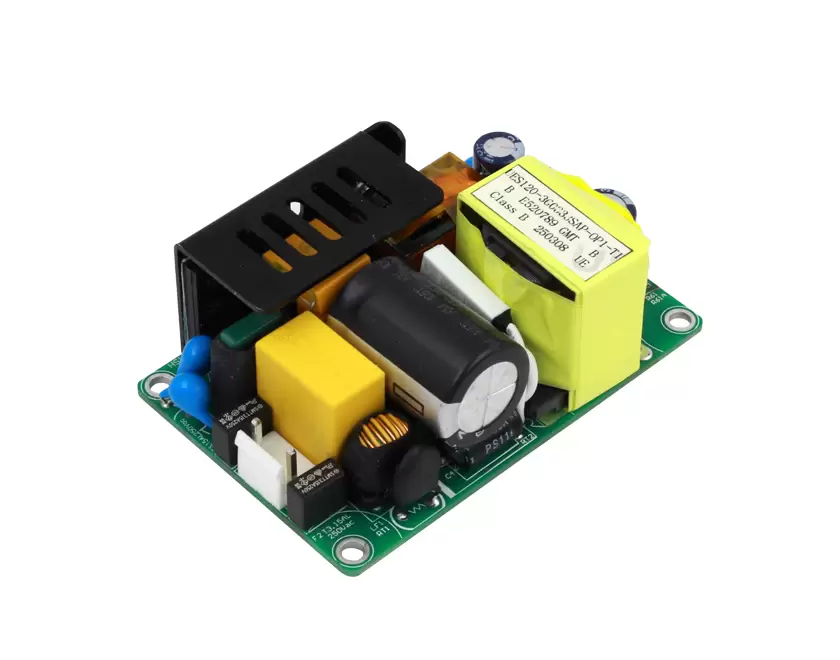
UE Electronic designs and manufactures the UES120-SPAZ-OP as a purpose-built power supply for medical equipment operating in demanding environments. The unit compresses a 120W-class output into a compact 76.2 × 50.8 × 31mm open-frame footprint weighing about 130g.
What Makes This Power Supply for Medical Equipment Different?
What makes this design different is that every headline spec ties back to a real deployment constraint rather than a marketing checkbox. Nine output voltage options (12V through 54V) let designers match the supply to oral irrigators, oxygen concentrators, ventilators, and defibrillators without redesigning the power stage per device.
The unit is certified to CB (IEC 60601-1), TÜV Mark (EN 60601-1), and NRTL (ANSI/AAMI ES60601-1, CAN/CSA-C22.2 No. 60601-1) — the three certification paths most requested by medical OEMs selling internationally. Full specifications are available on the UES120-SPAZ-OP product page, alongside UE Electronic’s broader medical power supply lineup.
How Do Industrial-Grade Components Deliver Long-Term Reliability?
Industrial-grade components deliver long-term reliability by surviving conditions well outside normal indoor use — cold starts, load spikes, and years of continuous duty — without degrading isolation or output accuracy.
Can It Cold-Start at -30°C and Survive Peak Loads?
Yes. The UES120-SPAZ-OP is rated to start and operate from -30°C, addressing cold-chain and unheated-transport scenarios that portable medical devices often face. It also tolerates a peak load of 125% of rated output at 230VAC, covering the brief current surges that occur when a device’s motor or compressor first engages.
Storage temperature extends to -40°C, so the unit can also sit in an unheated vehicle or depot without cold-related stress on its capacitors or solder joints before it’s even powered on.
What Does an MTBF Over 1,000,000 Hours Mean in Practice?
An MTBF (mean time between failures) over 1,000,000 hours, measured per Telcordia SR-332 at 25°C ambient, means the statistical failure rate across a large population of units is extremely low — translating to fewer field returns and less unplanned downtime for hospital biomedical teams managing fleets of oxygen concentrators or infusion pumps.
- Standby power consumption: ≤0.5W, reducing idle energy waste in always-on clinical settings
- Energy efficiency: Level VI, meeting current international efficiency thresholds
- Output ripple: as low as 150mVpk-pk on lower-voltage variants, supporting sensitive analog circuitry
Conclusion: Matching Your Power Supply to the Environment
Choosing the right power supply for medical equipment comes down to matching the isolation, thermal, and component specifications to where the device will actually operate — not just where it was designed. A unit rated only for sea-level, room-temperature use will eventually fail in a high-altitude clinic or an unheated field unit, regardless of how well it performs on a lab bench.
The UES120-SPAZ-OP demonstrates how an open-frame AC-Dc power supply can be engineered specifically for these constraints: extended clearance for altitude, a thermal derating curve for compact enclosures, and industrial-grade components rated for cold starts and sustained peak loads. For OEMs building oxygen concentrators, defibrillators, ventilators, or similar devices bound for demanding environments, these aren’t incremental improvements — they’re the difference between a device that works reliably in the field and one that doesn’t.