

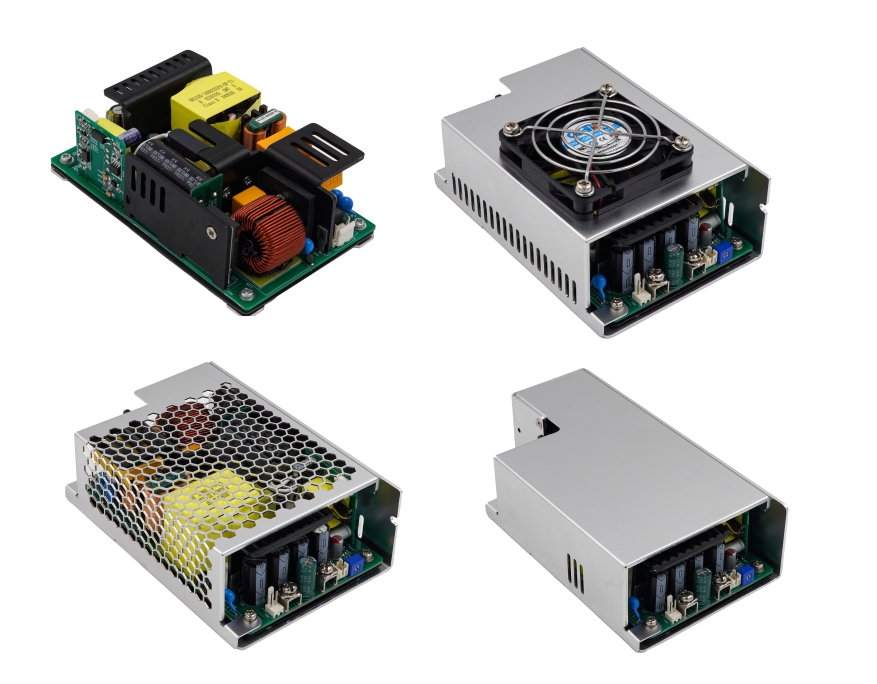




A stable 12V DC rail demands tight regulation, not just step-down. It must convert incoming AC power into controlled DC power while managing switching, isolation, heat, and output regulation. At UE Electronic, we design power solutions around these requirements, and our UES500-SPAZ-OP provides a practical example of how a high-power open-frame AC-DC supply can be integrated into medical and I.T.E. equipment.
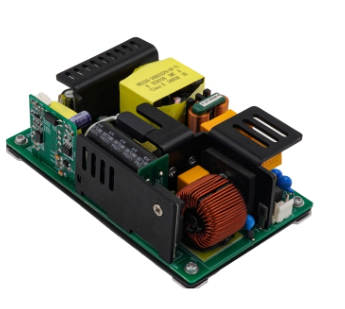
What Happens Inside an Open Frame Switching Power Supply?
An open frame switching power supply converts AC electricity into regulated DC electricity through several coordinated stages. Although the detailed circuit architecture varies between designs, the basic process begins with AC input conditioning and rectification.
The incoming AC voltage is first processed by the input section. The alternating waveform is converted into a form suitable for high-frequency switching. A switching circuit then operates electronic components at a high frequency, allowing the power supply to control energy transfer more efficiently than a conventional low-frequency transformer approach.
The switching stage transfers energy through the power-conversion circuit and, where required, an isolation transformer. The secondary side then converts the transferred energy into DC output and uses feedback control to keep the output voltage within its specified range as the input voltage or load changes.
For a 12V model, the objective is therefore not simply to “change” an AC voltage into 12V. The complete circuit must repeatedly monitor and regulate the energy delivered to the output so that the connected equipment receives a usable DC supply.
How Does a 12V Open Frame Power Supply Maintain a Stable Output?
The regulation process is particularly important when equipment has changing power demands. A device may draw different amounts of current during startup, normal operation, or periods of higher processing activity. A properly designed switching power supply responds to these changes through its control and feedback system.
In the UES500-SPAZ-OP series, the available output configurations range from 12V to 54V. For the 12V configuration, the official specification lists a convection current of 26.66A and a rated power of 319.92W. The maximum specified ripple is 150mVpk-pk, while average efficiency is listed at 92%.
These specifications should be considered together rather than treating “12V” as the only selection criterion. The required output current, total load, allowable ripple, cooling method, and equipment operating environment all affect whether a particular power supply is suitable for a system.
Why Does the Open-Frame Structure Matter?
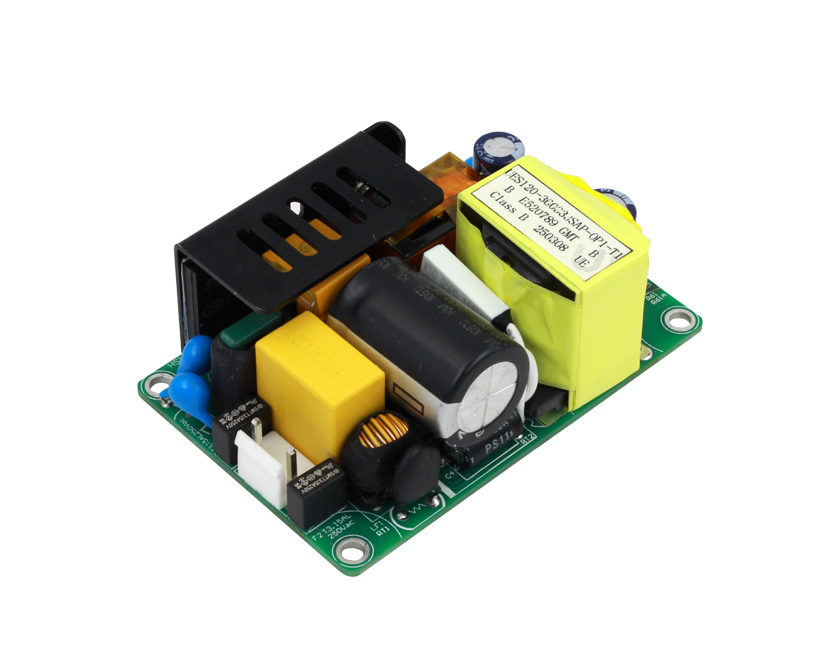
The open-frame construction changes how we approach thermal and mechanical integration. Instead of placing the power electronics inside a complete external enclosure, the module can be installed within the equipment’s own housing.
For our UES500-SPAZ-OP, the mechanical dimensions are 127.0 × 76.2 × 41.0mm, with a listed weight of 480g. The design supports convection cooling for the specified 320W-class operating configuration. The UES500 family can also provide up to 500W with forced-air cooling supplied by the user, depending on the applicable model and thermal conditions.
This makes airflow an important part of system-level design. The OEM needs to consider where the power supply is mounted, how air moves around the components, and whether the final equipment enclosure provides the required cooling conditions. An open-frame design gives the equipment designer more control over these factors, but it also means thermal integration cannot be ignored.
Where Can a 12V Open-Frame Supply Be Used?
We specify the UES500-SPAZ-OP for power-adapter applications in medical and I.T.E. equipment. This distinction matters because the application determines which safety, insulation, EMC, and environmental requirements need to be considered.
For medical equipment, electrical isolation and leakage-current characteristics can be important design considerations. The UES500-SPAZ-OP provides 2 MOPP isolation protection, and its listed leakage current is no more than 100μA. The product is also listed with safety certifications covering medical and I.T.E. requirements, including IEC 60601-1 and IEC 62368-1-related standards.
In I.T.E. applications, a 12V supply may be integrated into communication equipment, computing-related equipment, networking products, or other information-technology systems. Depending on the final equipment design, power supplies can also serve electronics such as LED equipment or other embedded electronic systems. The actual application must always be evaluated against the product’s specifications and applicable requirements.
What Should Engineers Check Before Selecting One?
When we evaluate a 12V open-frame design, we do not look at nominal voltage in isolation. Input conditions, output current, power rating, cooling, physical dimensions, operating temperature, isolation requirements, and regulatory requirements all form part of the selection process.
The UES500-SPAZ-OP accepts an input range of 80–264VAC, with the manufacturer specifying a derating curve for 80–115VAC operation. Its working temperature range is -30°C to 70°C, with derating requirements in the specified upper temperature range. Standby power consumption is ≤0.5W, and the specified operating altitude reaches 5,000 meters.
For equipment designers, these details help determine whether the power supply can be incorporated into the intended system without separating electrical selection from mechanical and thermal engineering.
Building the Power Stage Around the Complete Equipment
A 12V open frame power supply 12V solution is best understood as one part of a larger power architecture. The switching circuit, regulation mechanism, isolation, cooling arrangement, and output characteristics all contribute to how the finished equipment receives and uses electrical power.
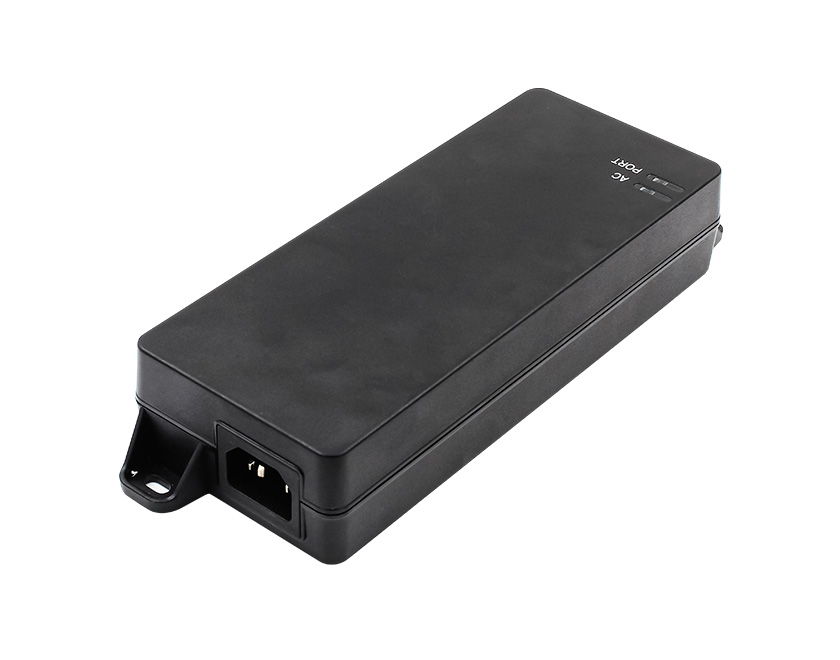
At UE Electronic, we approach this process from the equipment side as well as the power-supply side. Our broader portfolio includes medical power supplies, I.T.E. power supplies, PoE products, chargers, and other power solutions, while our DQA and EMC laboratory capabilities support independent verification and product quality control. By considering the electrical and integration requirements together, we can help OEMs identify a suitable power architecture instead of selecting a 12V module based on voltage alone.