







MOPP means Means of Patient Protection, an IEC 60601-1 insulation requirement used to reduce electrical shock risk to patients in medical electrical equipment. For B2B buyers, the bigger question is whether the power supply supports patient and operator safety within the final medical device system.
Understanding the MOPP meaning helps teams avoid over-specifying, under-specifying, or late redesigns. It also helps sourcing, engineering, and compliance teams speak the same language during supplier review.
What Does MOPP Mean in Medical Power Supplies?
MOPP means Means of Patient Protection, and it describes insulation measures used to reduce electrical shock risk to patients in medical equipment.
IEC 60601-1 covers basic safety and essential performance for medical electrical equipment. Within that framework, Means of Protection separates patient protection from operator protection.
Term | Full meaning | Target |
MOPP | Means of Patient Protection | Patient |
MOOP | Means of Operator Protection | Operator |
1 MOPP | One patient barrier | Basic insulation |
2 MOPP | Two barriers or reinforced protection | Higher redundancy |

How Is MOPP Different from MOOP?
MOPP is stricter than MOOP because patients may be connected to sensors, electrodes, probes, or other applied parts. The patient may also be unable to move away from a fault condition.
MOOP may fit operator-accessible areas, but it may not be sufficient when the electrical risk path can reach the patient.

Why Does Patient Contact Change the Requirement?
Patient contact changes the requirement because the body may become part of the leakage current path. Therefore, the power supply decision must start with patient contact.
This is why buyers should not treat mopp 2 as only a datasheet phrase. It should be checked together with the device’s applied part, enclosure design, leakage current path, and final certification plan.
What Are the Key Differences Between 1 MOPP and 2 MOPP?
The main difference between 1 MOPP and 2 MOPP is the level of insulation redundancy and the test requirements behind that insulation.
Requirement | 1 MOPP | 2 MOPP |
Creepage | 4 mm | 8 mm |
Clearance | 2.5 mm | 5 mm |
Dielectric strength | 1500 VAC | 4000 VAC |
Isolation | Basic patient insulation | Reinforced patient protection |
How Do Creepage, Clearance, and Dielectric Strength Differ?
Creepage is the shortest path along an insulating surface, while clearance is the shortest path through air. For 2 MOPP, both distances are doubled compared with 1 MOPP.
Dielectric strength is also different. 1 MOPP requires 1500 VAC, while 2 MOPP requires 4000 VAC. Therefore, 2 MOPP also requires a stronger verified insulation system.
How Does 5000m Altitude Affect Clearance?
Altitude matters because air insulation weakens as altitude increases.
In our previous technical article, we note that clearance at 5000m may need a correction factor of about 1.48. Therefore, a 5 mm 2 MOPP clearance may become about 7.4 mm.
This point is easy to miss during early sourcing. If the target device may be used in plateau hospitals, mobile clinics, aviation-related care, or high-altitude regions, clearance should be reviewed before the enclosure and PCB layout are fixed.
How Should B2B Buyers Choose Between 1 MOPP and 2 MOPP?
B2B buyers should choose the MOPP level based on applied part type, patient contact duration, leakage current limits, and certification strategy.
A practical decision flow is:
- Confirm whether the product is medical electrical equipment.
- Check whether any applied part contacts the patient.
- Classify the applied part as Type B, Type BF, or Type CF.
- Check leakage current limits and isolation needs.
- Confirm creepage, clearance, dielectric strength, and altitude conditions.
- Select a power supply with documented compliance.
- Match the supplier’s certificate scope with the final device market.
Which MOPP Level Fits Type B, BF, and CF Applied Parts?
Type B is generally the least stringent applied part category. Type BF is used when the applied part is floating and may have conductive patient contact. Type CF is the most stringent category.
Applied part | Contact logic | Direction |
Type B | Limited contact | 1 MOPP may be acceptable |
Type BF | Floating patient-connected part | 2 MOPP is commonly required |
Type CF | Cardiac floating risk | 2 MOPP plus tighter leakage control is usually expected |
What Common Selection Mistakes Should Teams Avoid?
The first mistake is treating “medical grade” as a complete specification. Buyers still need to check the exact standard, isolation rating, leakage current, and certificate scope.
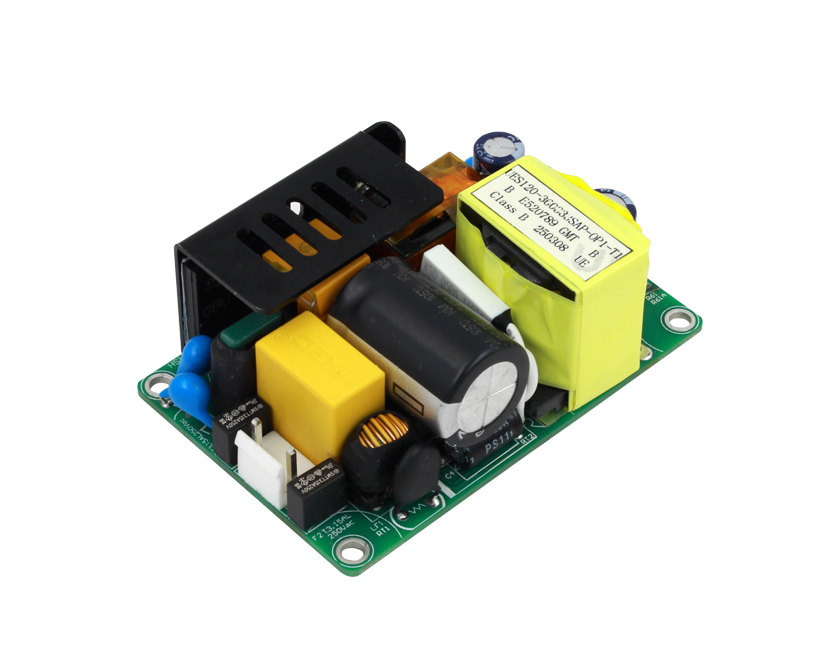
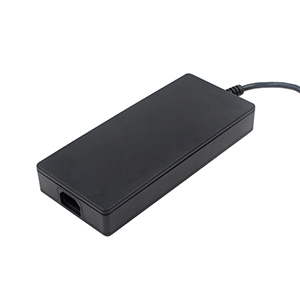
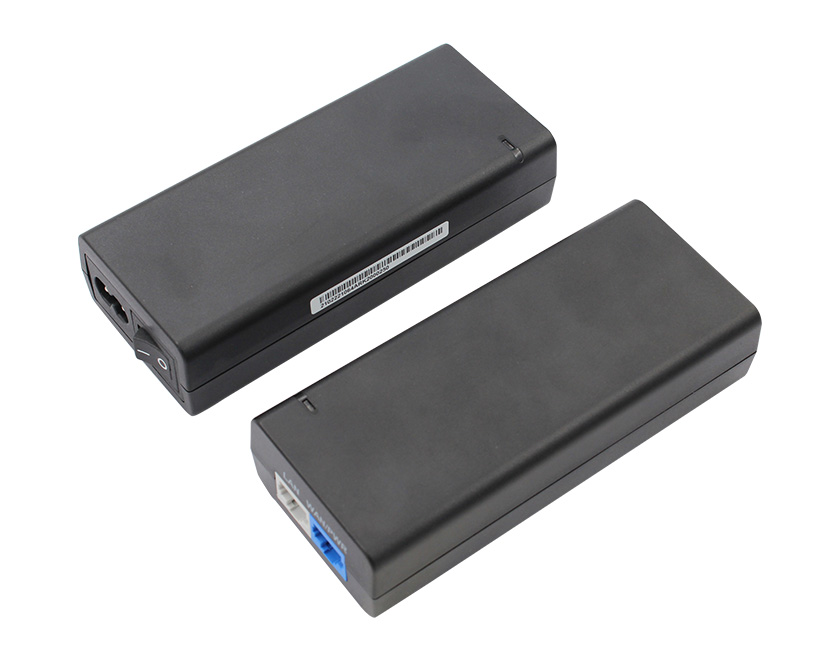
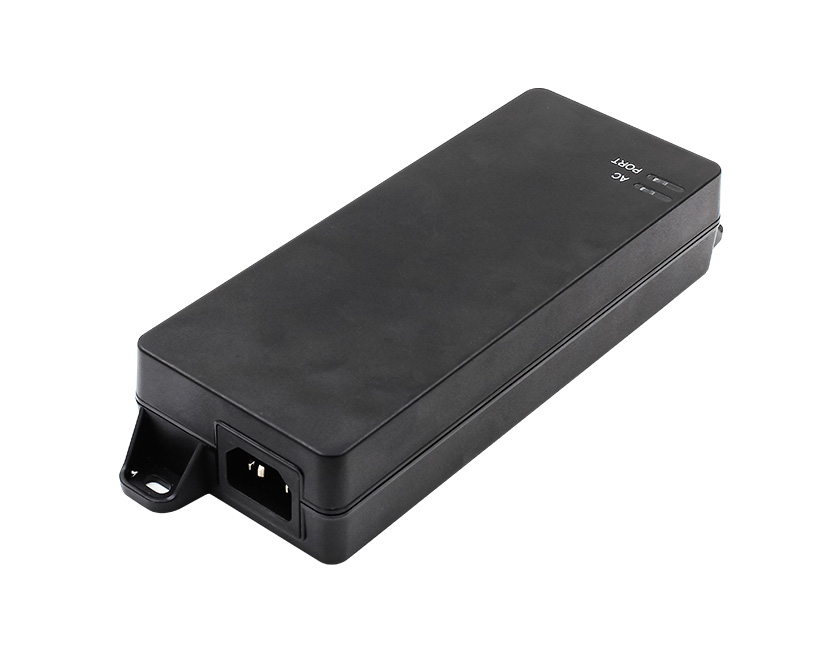
We provide industrial and medical power supply units, including medical adapters, chargers, and open-frame power supplies from 5W to 300W, with insulation up to 2 MOPP. 2 MOPP improves insulation redundancy, but leakage current still depends on the circuit, filtering design, applied part type, and system architecture.
The third mistake is ignoring altitude. A power adapter that passes at standard conditions may need different clearance planning for plateau regions or mobile medical use.
The fourth mistake is selecting only by unit price. In B2B procurement, a cheaper supply can become expensive if it causes repeated EMC testing, mechanical redesign, delayed certification, or supplier requalification.
How Does UE Electronic Support Industrial and Medical Power Supplies?
UE Electronic supports industrial and medical power supplies through a portfolio that covers medical adapters, chargers, and open-frame power supplies from 5W to 300W, with insulation up to 2 MOPP.
For buyers comparing suppliers, our medical power supply solutions can support projects that need IEC60601, EN60601, or ANSI/AAMI ES60601 alignment.
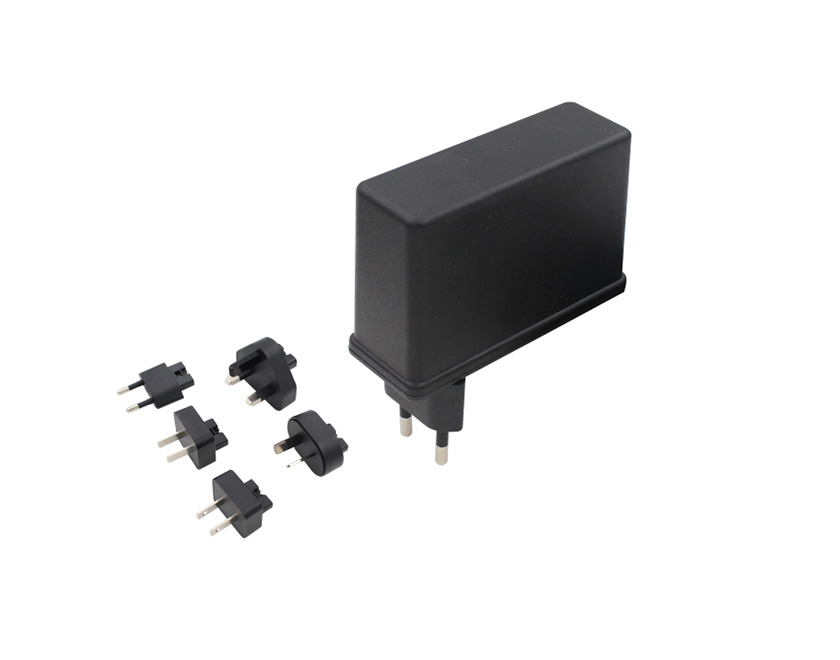
A specific example is the UES60LCP2-SPA switching power adaptor for medical device applications. For this model, we list 2 MOPP isolation protection, leakage current ≤100μA, standby power consumption ≤0.15W, 12V to 24V output, up to 60W power, interchangeable plug design, and 5000m working altitude.
This does not mean one model fits every medical device. Instead, it gives sourcing teams a documented starting point for compact adapters used in communication, medical, or general-purpose equipment.
For OEM and ODM teams, the useful question is not only “Does this adaptor have 2 MOPP?” A stronger question is: “Can this adaptor support our applied part type, leakage current target, market certification route, operating altitude, plug requirement, and lifecycle purchasing plan?”
Conclusion: How Should You Make the Final MOPP Decision?
The right MOPP decision should match the patient risk path, not simply the highest number on a datasheet.
For low-risk designs, 1 MOPP may be enough if the full medical system supports that choice. For floating patient-connected or higher-risk devices, 2 MOPP is usually the more appropriate compliance direction.
Before releasing a design, confirm applied part type, insulation level, creepage, clearance, dielectric strength, altitude correction, leakage current, certificate scope, and supplier documentation.
When buyers evaluate our power supply products, they should match verified product data with the device’s patient contact scenario, certification path, and operating environment.