







Sourcing an ITE power supply looks simple: pick a voltage, pick a wattage, place the order. In practice, information technology equipment (ITE) power supplies sit inside networking gear, servers, and telecom infrastructure where one failure can take down a whole system. Procurement teams repeat the same seven mistakes when comparing vendors. Below is a breakdown of each pitfall, why it happens, and how to source around it.
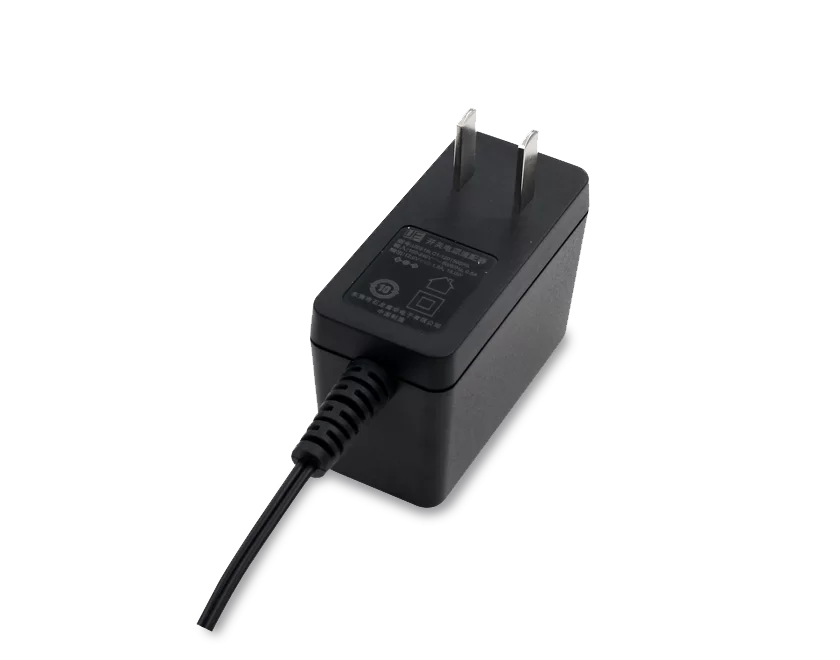
Pitfall 1: Why Do Buyers Overlook Updated ITE Safety Standards?
Buyers overlook updated safety standards because older certifications look valid on a datasheet, even after the underlying rule has changed. IEC 62368-1 replaced the legacy IEC 60950-1 framework for many IT and communications products, with regional versions and transition dates varying by market. Many suppliers still reference legacy 60950-1 test reports without flagging that new submittals are no longer accepted.
What Changed When IEC 62368-1 Replaced IEC 60950-1?
The new standard uses hazard-based safety engineering instead of a fixed, prescriptive checklist. It classifies energy sources by injury potential and then requires specific safeguards for each one, rather than applying blanket voltage limits. For example, a circuit once treated as safe under 60950-1 may now require a physical barrier under 62368-1 if it falls into a higher energy class.
Quick compliance checklist before signing a purchase order:
- Certificate references IEC/UL 62368-1, not just legacy 60950-1.
- Report includes hazard classification by energy source, not just a pass/fail.
- Regional variants (EN, UL, CSA) are noted, since certifications rarely transfer between markets.
Always ask for the current ITE safety standards power supply report, not a prior-generation file, before approving a vendor.
Pitfall 2: What Happens When Surge Protection Is an Afterthought?
Surge protection gets treated as an afterthought when a power supply passes basic bench testing but has never been evaluated under real installation conditions. Lightning-induced transients and switching surges vary by environment, and a supplier’s minimum-spec unit may only meet the lowest published tier. As a result, equipment installed in outdoor cabinets, industrial panels, or shared telecom racks fails in the field despite clearing a lab test.
How Much Surge Protection Do Complex Environments Actually Need?
The answer depends on installation category, not wattage alone. IEC 61000-4-5 defines surge immunity test levels that are selected according to the applicable product standard, installation conditions, and coupling configuration. Buyers should verify the required line-to-line and line-to-ground test levels for the intended application. A power supply rated for 6 kV of lightning protection can absorb transients that a 1 kV unit would pass straight through to downstream components.
- Ask which IEC 61000-4-5 class (1 through 4) the unit was tested against.
- Confirm testing covered line-to-line and line-to-ground scenarios.
- Match the tested class to the actual cabling environment, not just the rated wattage.
Pitfall 3: Why Does Production Method Matter for Batch Consistency?
Production method matters because two units built to the same schematic can still behave differently if they come off inconsistent assembly lines. Manual soldering, hand-placed components, and non-automated testing introduce unit-to-unit variance that a single sample audit will not catch. A buyer who approves one golden sample may still receive a batch with inconsistent output tolerances months later.
Automated production paired with in-line testing closes that gap, because every unit runs through the same calibrated process. As a result, output voltage, leakage current, and thermal performance stay within a tighter band across a shipment of ten thousand units instead of just the sample of ten. Third-party quality verification then confirms that consistency holds, rather than creating it.
Signs a manufacturer treats consistency seriously:
- Automated SMT lines, not manual assembly, for core power stages.
- A quality assurance function kept separate from production.
- Documented process control data available on request.
Pitfall 4: How Early Should EMC Compliance Be Verified in the Design Phase?
Electromagnetic compatibility (EMC) compliance should be verified before the printed circuit board layout is finalized, not after a prototype is built. EMC failures, such as conducted emissions or radiated interference, are usually rooted in layout and filtering decisions that are expensive to redesign late. Waiting until final certification testing to check EMC performance often means a full board respin.
A supplier with an in-house EMC laboratory can pre-screen a design against conducted and radiated emission limits during development, catching interference issues before tooling is committed. Without that step, a buyer risks discovering a compliance failure only after production molds and cable assemblies are already ordered.

Pitfall 5:Why Do Energy Efficiency and Thermal Design Affect Long-Term OPEX?
Energy efficiency and thermal design affect long-term operating expenditure (OPEX) because a power supply’s active-mode efficiency and no-load consumption compound across thousands of installed units running continuously. For covered external power supplies in the U.S. DOE has established energy efficiency requirements that include active-mode efficiency and no-load power limits. Buyers should verify which DOE requirements apply to the specific power supply type and market.
Rated Output Power | Max No-Load Power (DOE Level VI) |
Up to 49 W | 0.10 W |
Above 49 W, up to 250 W | 0.21 W |
Above 250 W | 0.50 W |
Source: U.S. Department of Energy, Federal Register 88 FR 7284 (Feb. 2, 2023), Table II.1; 10 CFR 430.32(w). Values apply to single-voltage AC-DC, basic-voltage power supplies.
A unit certified only to an older, lower tier draws more power around the clock, even while idle.
Heat is the other half of the equation. A power supply with weak thermal design forces the host equipment to run its own cooling harder, which raises both energy use and the failure rate of nearby components over years of service. Even small no-load consumption differences, once multiplied across a fleet of thousands of deployed units, add measurable annual electricity cost.
- Compare efficiency ratings using the same DOE level marking (for example, Level VI), not headline percentage numbers alone.
- Check standby/no-load power draw separately from active-mode efficiency.
- Ask whether cooling relies on convection alone or needs forced air, since this changes enclosure requirements.
Pitfall 6&7: How Should Buyers Handle Power Scalability, Form Factor, and Manufacturer Experience?
Power scalability and form factor go wrong when a buyer selects a supply that fits today’s product but cannot scale to the next hardware revision without a full redesign. Many suppliers offer a single wattage tier with a fixed footprint, forcing a new sourcing cycle every time output requirements grow. Procurement teams end up managing multiple vendor relationships for what should be one power platform.
Manufacturer experience closes this gap. A supplier with a genuine history supporting Tier-1 telecom customers has already solved the scalability problem across a wide wattage range, because that customer base demands it. UE Electronic, for example, has supplied ITE power products to major communications companies including ZTE and Nokia for more than 20 years, and its ITE power supply lineup spans 5 W to 500 W within a consistent design platform, backed by more than 40 invention patents.

What to verify with any prospective ITE power supply manufacturer:
- Does the wattage range cover current and next-generation needs, avoiding a second sourcing cycle within 12–18 months?
- Can the same platform scale in output without a new form factor or new certification rework?
- Has the manufacturer supplied Tier-1 telecom or IT OEMs, signaling a design that has survived high-volume deployment?
Sourcing from a power supply manufacturer without that track record often means re-learning these lessons on your own production line.
Conclusion: What Does a Reliable ITE Power Supply Sourcing Checklist Look Like?
A reliable sourcing checklist confirms seven things before a purchase order is signed: current IEC 62368-1 certification, surge protection matched to the real installation environment, automated production for batch consistency, early EMC pre-screening, energy efficiency and thermal data measured against the applicable DOE efficiency level (for example, Level VI), a scalable wattage platform, and a manufacturer with demonstrated Tier-1 experience. Each pitfall traces back to the same root cause: treating power supply selection as a commodity purchase instead of an engineering decision.
The fastest way to avoid all seven mistakes at once is to work with a supplier that already builds compliance, surge tolerance, and scalability into its standard platform rather than as custom add-ons. That approach turns a recurring sourcing headache into a one-time engineering decision that holds up across product generations.