






When designing industrial equipment, power distribution needs careful planning. Voltage selection affects current levels, cable sizing, heat generation, and overall system layout. A 12V and 24V system may use the same power rating, but the required wire size can be different because current changes with voltage.
At UE Electronic, we work with industrial, communication, and medical equipment customers to develop suitable power solutions. We focus on stable operation, quality control, and customized development support to help customers select proper power designs for different applications.
The Relationship Between Current and Open Frame Power Supply Selection
In a DC power system, current is influenced by output power and voltage. When voltage decreases, current increases under the same power requirement. This relationship directly affects cable selection because higher current usually requires larger conductors to reduce voltage drop and heat loss.
For example, a 120W load requires about 10A at 12V but only about 5A at 24V. A 12V design may need thicker wires, especially when the cable distance between the power module and equipment increases.
Why Open Frame Power Supply 12v Systems Require More Attention to Wiring
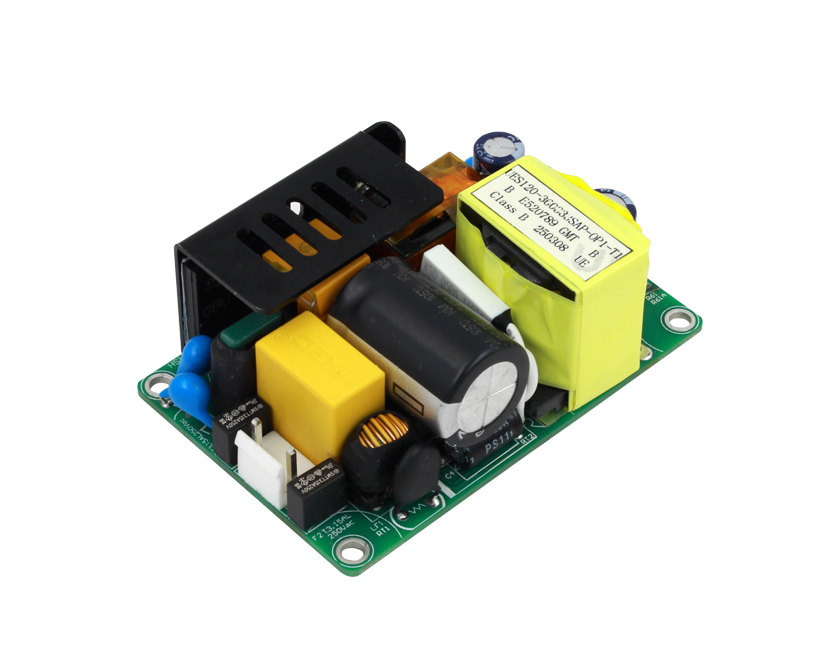
An open frame power supply 12v solution is commonly used in equipment that requires low-voltage DC output. In these applications, engineers need to evaluate cable length, current capacity, and installation conditions before selecting wire specifications.
A longer cable creates higher resistance, which can increase voltage loss during operation. For this reason, designers may choose larger wire sizes for 12V systems to maintain stable voltage at the load end and support consistent equipment performance.
How 24V Systems Change High-current Wire Requirements
Compared with 12V designs, 24V systems normally operate with lower current under the same power output. This can reduce the demand for larger cables and provide more flexibility in equipment layout. Lower current also means less heat generation along the conductors, which can improve system efficiency and allow for more compact wiring harnesses in space-constrained installations.
However, wire selection is still related to the complete application. Engineers need to consider operating temperature, cable routing, connection points, and safety requirements. Voltage drop over longer distances remains a factor, as does insulation durability in harsh environments. Proper terminal selection and strain relief are equally important to maintain reliable connections over time. A suitable design balances electrical performance with practical installation needs.
Choosing the Right Open Frame Power Supply for Requipment Integration
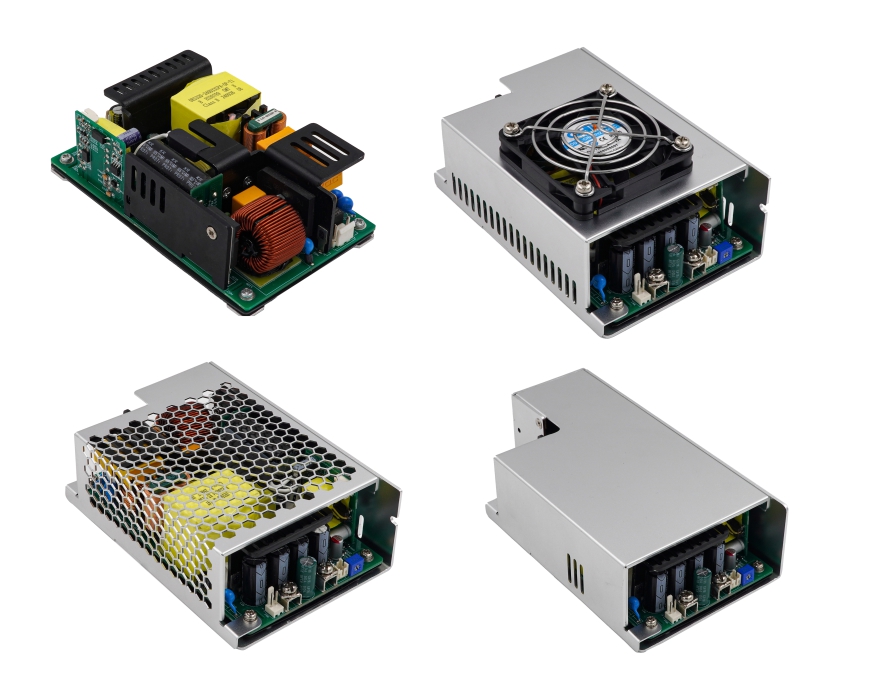
Besides wiring, the power module design also influences system reliability. We develop power products based on application requirements, including industrial, communication, and medical equipment scenarios. Our solutions include different power supply types to match various equipment structures.
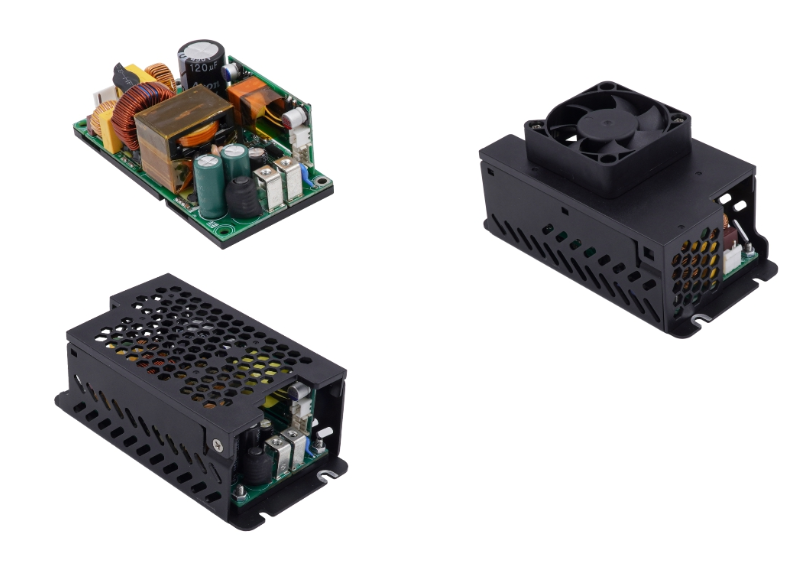
The UES250-SPAZ-OP is a high-reliability open frame power supply designed by us for ITE and medical environments. It applies switching power supply architecture and safety-focused AC DC design principles. The model supports communication and medical safety certifications, 2 MOPP isolation protection, and Energy Efficiency level VI.
Engineering Verification Supports Stable Power System Design
When customers develop equipment, cable selection is only one part of the design process. Power supply testing and verification are also important. At UE Electronic, we use a standard EMC laboratory and an independent DQA laboratory to verify product performance from different perspectives.
The UES250-SPAZ-OP supports leakage current ≤100 μA, standby power consumption ≤0.5W, and working altitude up to 5000 meters. It provides 150W convection cooling and 250W forced air cooling provided by users, allowing designers to select suitable cooling methods according to application conditions.
Practical Factors When Using Open Frame Power Supply 12V
For an open frame power supply 12v system, engineers usually pay more attention to current flow because the same power output requires more current compared with a 24V system. This factor becomes more important in compact equipment or applications with longer wiring distances.
We also provide customization support for customers with different equipment requirements. Our development capability allows us to adjust power solutions according to application needs, while our MES traceability system can support product tracking to the smallest package when requested by customers.
Building Reliable Power Solutions Through Complete Support
A suitable power system requires cooperation between electrical design, component selection, and quality verification. We provide customers with support beyond basic power supply production, including customization, EMC testing assistance, and quality management.
With stable operation and long-term supply planning, UE Electronic continues to support customers in industrial and medical fields. By combining engineering experience with verification systems, we help equipment manufacturers create practical power designs for different voltage requirements.
Understanding Voltage Differences Helps Improve System Planning
The difference between 12V and 24V high-current systems mainly comes from current demand. A 12V system usually requires more attention to wire size because higher current can increase voltage drop and heat loss. A 24V system may reduce current demand under the same power condition.
By evaluating voltage, current, cable design, and power supply performance together, engineers can create more suitable equipment solutions. Proper planning helps improve system stability and supports reliable operation in various industrial applications.